Google Just Published Its First AI Search Optimization Guide. Here Is What It Says.
On May 15, 2026, Google released an official guide to optimizing for AI Overviews and AI Mode. The headline: GEO and AEO are "still SEO." Here is everything the guide recommends, everything it debunks, and what the data says about whether Google is right.

On May 15, 2026, Google published a document that the AI visibility industry has been waiting for: an official guide to optimizing for generative AI features on Google Search. The guide, titled "Optimizing your website for generative AI features on Google Search," was announced by John Mueller through Google Search Central (Google Developers, May 15, 2026). It covers AI Overviews, AI Mode, and the broader set of AI-powered search experiences Google has rolled out to over 2 billion users globally.
The core message is blunt: "Best practices for SEO continue to be relevant because our generative AI features on Google Search are rooted in our core Search ranking and quality systems" (Google Search Central, 2026). In other words, Google says GEO and AEO are still SEO. This matters because it is the first time Google has consolidated its scattered guidance on AI search optimization into a single, official document.

What the Guide Actually Says
The guide is structured around three areas: what to do, what not to do, and what is coming next. Here is the full breakdown.
How Google's AI Features Find Content
Google explains that its AI search features use two techniques that rely on traditional search ranking systems. The first is retrieval-augmented generation (RAG), which grounds AI responses in content discovered through Google's existing index and ranking systems. The second is query fan-out, where the AI generates related searches to find additional relevant content. Both techniques pull from the same index and ranking signals that power traditional Google Search (Google Search Central, 2026).
This is the technical basis for Google's "still SEO" claim. If AI features use the same ranking systems as regular search, then the same optimization practices should apply. The data supports this: a Brainlabs study (July 2025) found that 96% of links cited in AI Overviews came from pages already in the top 10 organic results.
What Google Says to Do
The guide's positive recommendations fall into two categories: content quality and technical foundations.
Content quality. Google emphasizes creating "unique, compelling, and useful" content and says this "will likely influence a website's presence in generative AI search more than any other suggestions in this guide" (Google Search Central, 2026). The guide specifically calls out "non-commodity content," meaning material with distinctive perspectives, original research, or firsthand experience rather than information that is widely available elsewhere. It also recommends supporting text with high-quality, relevant images and videos, and organizing content with clear headings and logical structure.
Technical foundations. The guide lists standard SEO requirements: pages must be indexed and eligible for snippets, content must be crawlable, sites should use semantic HTML, follow JavaScript SEO best practices, deliver good page experience across devices, and minimize duplicate content. For e-commerce and local businesses, Google recommends using Merchant Center feeds and Google Business Profiles, and mentions a new "Business Agent" feature for conversational shopping experiences (Google Search Central, 2026).
Five Myths Google Explicitly Debunks
The most actionable section of the guide is the myth-busting. Google directly addresses five optimization tactics that have been widely promoted in the GEO and AEO space:
1. llms.txt files and special AI markup
Google says you do not need to create machine-readable files, AI text files, special markup, or Markdown versions of your content to appear in generative AI features. While Google indexes various file types, none receive preferential treatment in AI search features (Google Search Central, 2026). This directly contradicts the llms.txt movement, which proposed creating simplified text versions of web pages specifically for LLM consumption.
2. Content chunking for AI systems
Google says you do not need to break content into tiny pieces for AI to understand it. The guide states: "Google Search generative AI models are able to understand the nuance of multiple topics on a page and show the relevant piece to users" (Google Search Central, 2026). This challenges the widely-promoted idea that content needs to be restructured into short, modular "chunks" to be extractable by AI systems.
3. Rewriting content specifically for AI
Google says rewriting content in a specific way for AI systems provides minimal benefit. AI systems recognize synonyms and general meanings without requiring keyword variation rewrites. The guide implies that writing clearly for human readers is sufficient for AI comprehension as well (Google Search Central, 2026).
4. Manufactured mentions across the web
Google says seeking artificial product mentions across blogs and forums is not effective because its core ranking systems include spam-filtering mechanisms. Since AI features rely on those same ranking systems, inauthentic mentions are filtered before they can influence AI-generated responses (Google Search Central, 2026). This applies to tactics like seeding product mentions in Reddit threads, forum posts, or guest blog networks specifically to influence AI citations.
5. Special structured data for AI
Google says no exclusive schema markup or structured data is required for generative AI visibility. Standard schema markup remains valuable for rich results in regular Search (which can indirectly feed into AI Overviews), but there is no special schema that directly drives AI citations (Google Search Central, 2026).
Google's Position on GEO and AEO as Terms
The guide makes a deliberate choice about terminology. It states that AEO (Answer Engine Optimization) and GEO (Generative Engine Optimization) "are terms used to describe work focused on improving visibility in AI search experiences," but from Google Search's perspective, "optimizing for generative AI search is optimizing for the search experience, and thus still SEO" (Google Search Central, 2026).
This aligns with statements John Mueller has made over the past year. In a December 2025 post, Mueller said: "What you call it doesn't matter, but 'AI' is not going away, but thinking about how your site's value works in a world where 'AI' is available is worth the time" (Search Engine Land, December 2025). He has also cautioned that "there is no such thing as GEO or AEO without doing SEO fundamentals" (SE Roundtable, 2025). Earlier, in August 2025, Mueller warned that aggressive promotion of GEO, AIO, and AEO terminology "may indicate spam tactics targeting marketing professionals" (Search Engine Journal, August 14, 2025).
The message is consistent: Google sees AI search optimization as an extension of what SEO professionals should already be doing, not a new discipline requiring new tools and new tactics.
What the Data Says: Is Google Right?
Google's "still SEO" position is partially supported and partially complicated by independent research.
Evidence that supports Google's position
Organic rankings predict AI citations on Google. The Brainlabs study (July 2025) found that 96% of links in AI Overviews came from the top 10 organic results. A more recent analysis by BrightEdge found that AI Overview citation overlap with organic rankings reached 54% (BrightEdge, 2026). If you rank well organically on Google, you are likely to appear in Google's AI features.
AI traffic from Google is high-value. Semrush research (June 2025) found that AI search visitors are worth 4.4x more economically than traditional organic traffic. Separately, ChatGPT referral traffic converts at 16% compared to Google organic's 1.8% (RankStudio, 2026). The traffic AI sends is smaller in volume but higher in quality.
Evidence that complicates Google's position
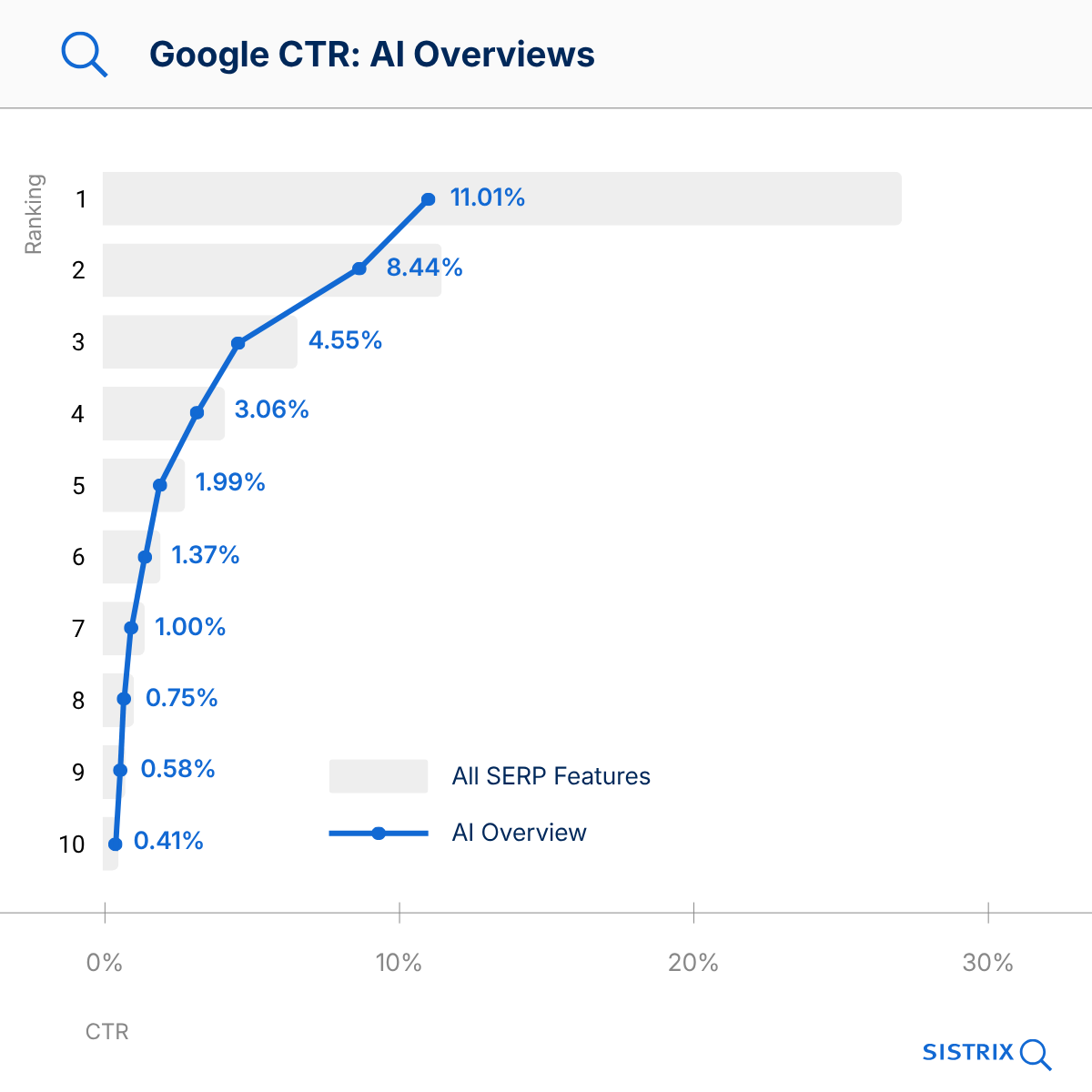
AI Overviews are reducing clicks significantly. SISTRIX data (February 2026) found that when an AI Overview is present, the click-through rate at position one drops from 27% to 11%, a decline of 59%. In Germany alone, AI Overviews cost 265 million organic clicks per month and affect 20% of all keywords (SISTRIX, 2026). Being optimized for AI search does not help if AI search eats the click before users reach your site.
The "still SEO" claim only applies to Google. This is the most important limitation. Google's guide addresses Google's AI features only. It does not address ChatGPT, Perplexity, Claude, or Gemini (outside of Google Search integration). Each of these platforms has its own retrieval systems, its own content selection logic, and its own citation patterns. Research consistently shows that what ranks on Google does not automatically appear in other AI platforms. Our own analysis found that the same brand query can produce completely different citations across platforms.
Non-Google platforms are growing. ChatGPT now has 900 million weekly active users and processes 250 to 500 million weekly search queries (FatJoe, 2026). ChatGPT drives 87.4% of all AI referral traffic (TechnologyChecker, 2026). Gemini has surged from 5.7% to over 25% AI chatbot market share in the past year, and Claude has grown from 1.4% to 6.02% (First Page Sage, 2026). Optimizing only for Google's AI features means ignoring a growing share of the AI search landscape.
What Google Also Announced: Five Link Updates
One week before publishing the optimization guide, on May 7, 2026, Google announced five changes to how links and citations appear in AI Overviews and AI Mode (Google Blog, May 7, 2026). These changes add context to the optimization guide because they show how Google is trying to maintain the connection between AI-generated answers and original web content.
- Suggested angles for further exploration. Google now shows suggestions at the end of AI responses linking to "unique articles or in-depth analyses" on related facets of the topic.
- Subscription highlighting. Links from publications you subscribe to get a "Subscribed" label in AI Mode and AI Overviews. Google says testing showed users were "significantly more likely to click links that were labeled as their subscriptions."
- Community perspectives. AI responses now include quotes from real people, including Reddit discussions, forums, and social media, displayed with creator names and handles rather than just website names.
- Website preview on hover. Hovering over inline links in AI Mode on desktop now shows a preview of the destination website.
- More inline links. Google is adding more links directly within AI response text, placed next to the relevant information rather than only at the end.
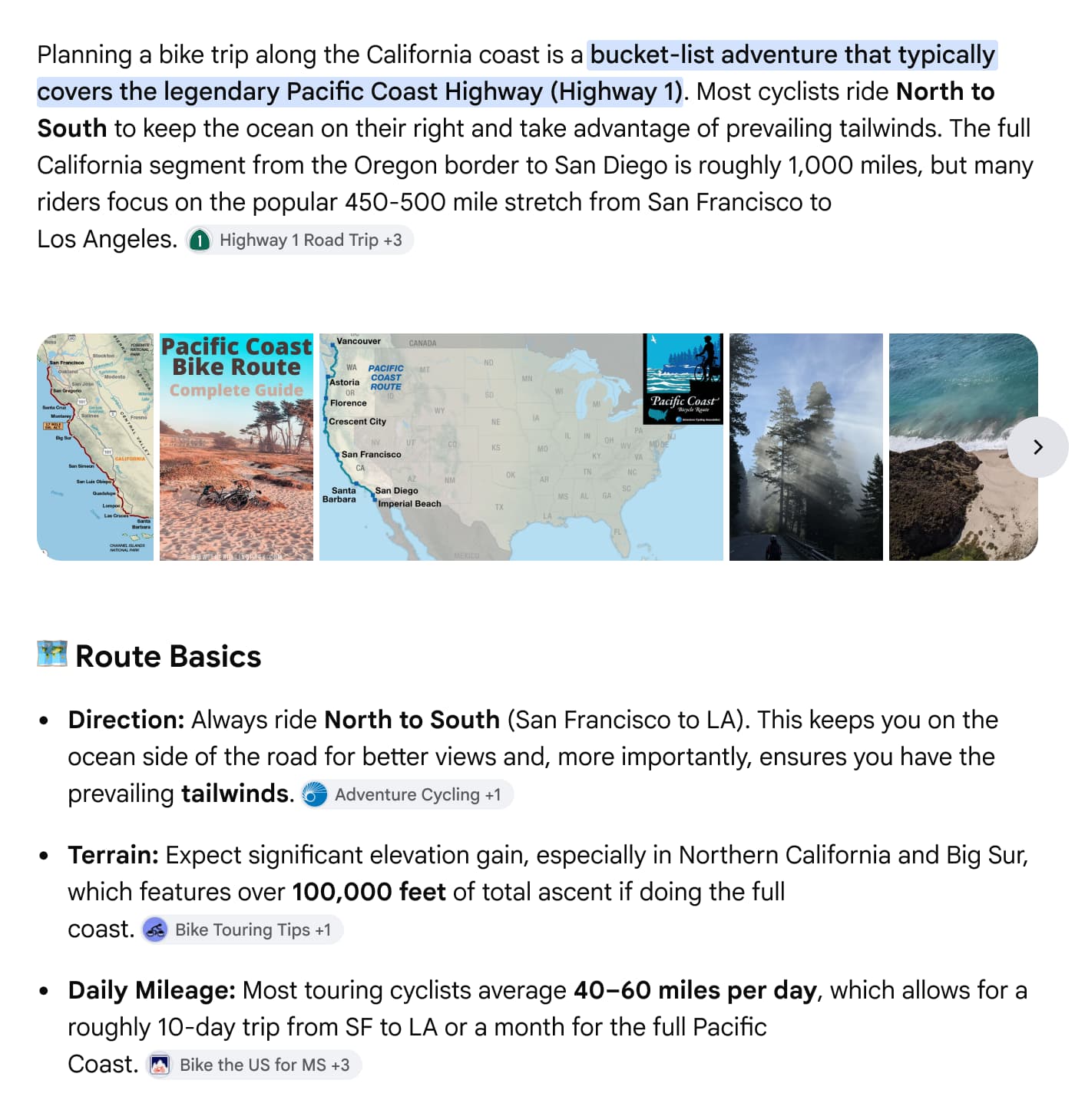
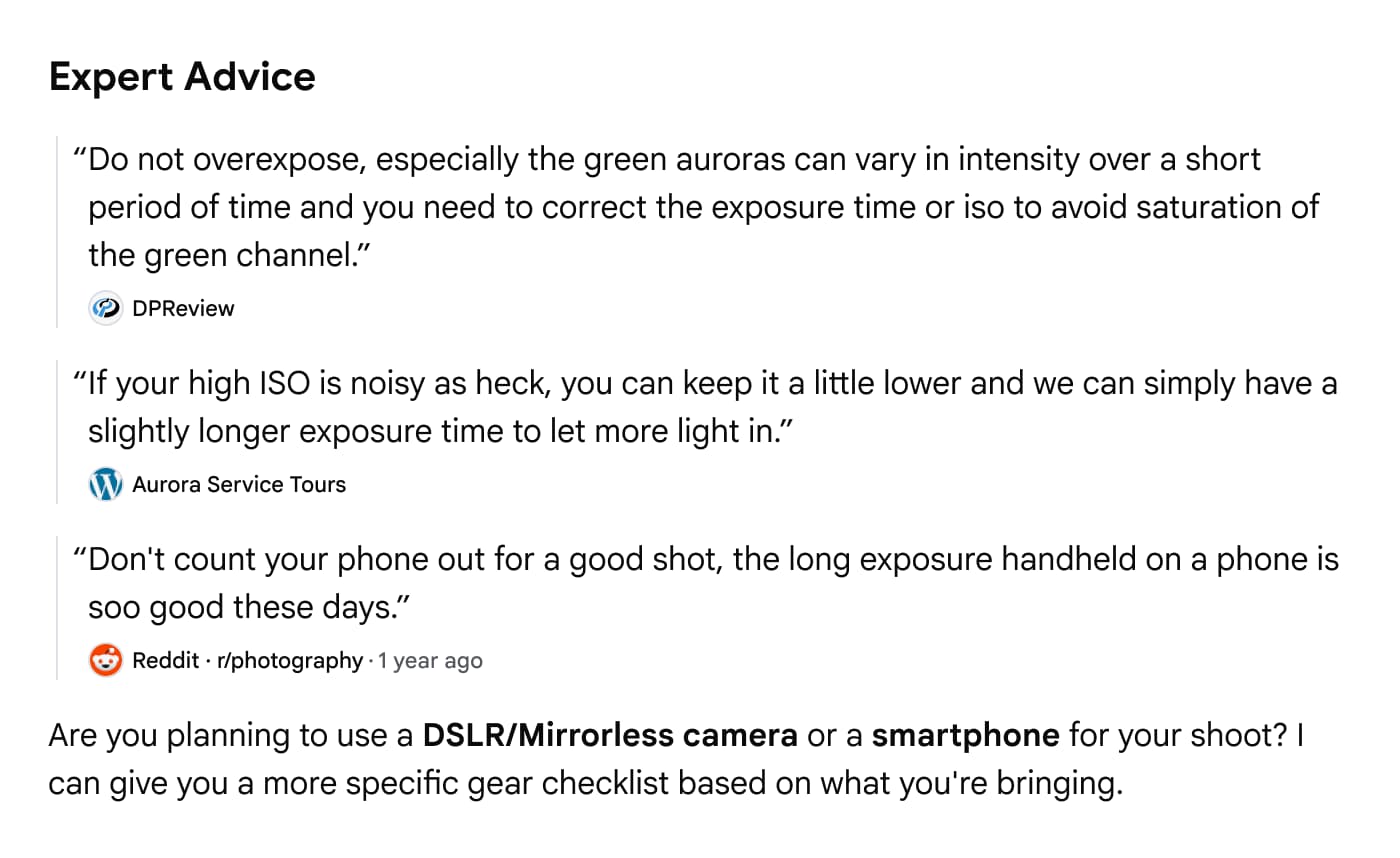
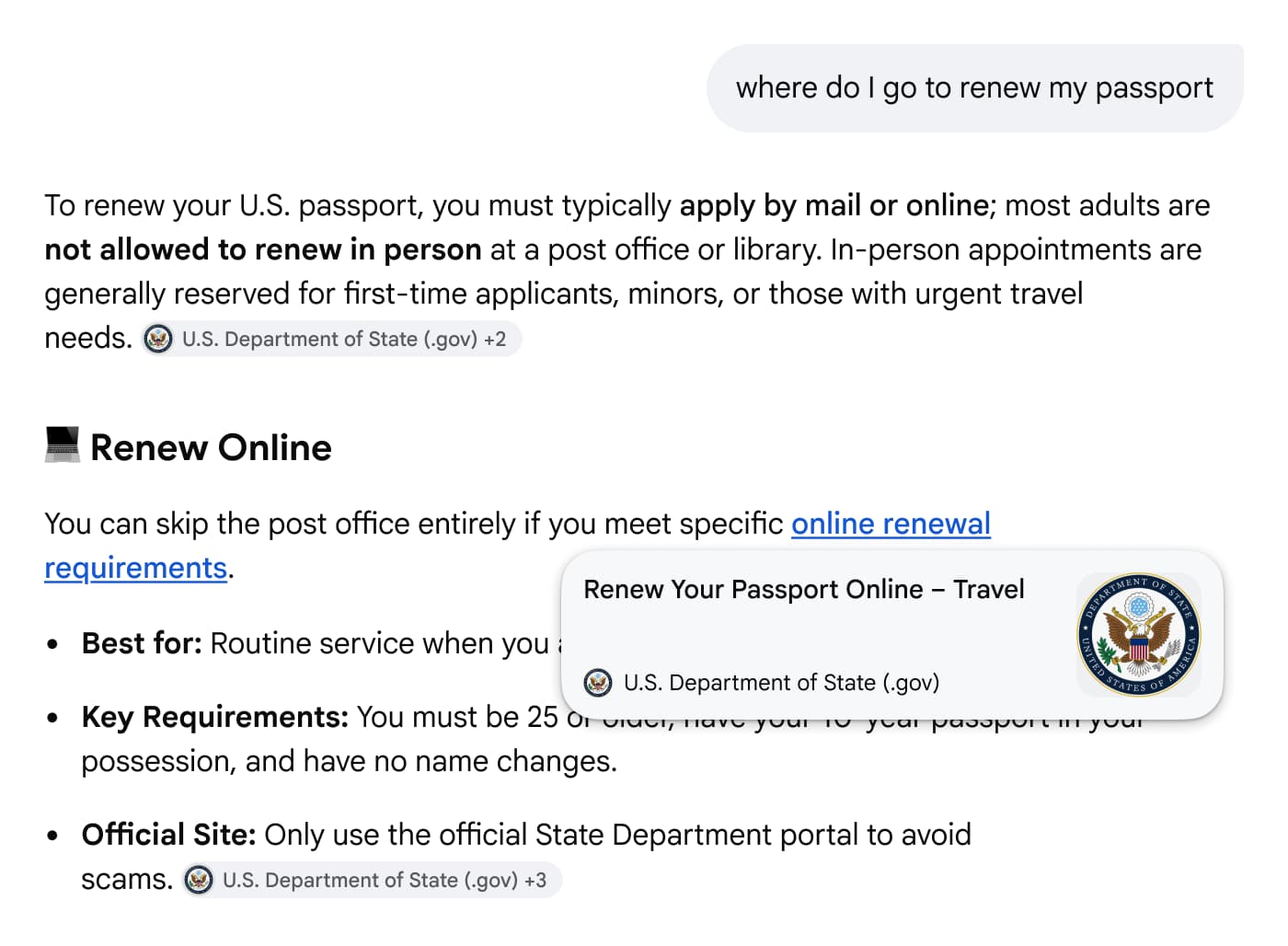
These changes suggest Google is aware that AI-generated answers reduce clicks to source websites and is actively trying to make those source links more visible and clickable.
What the Guide Says About Agentic Search
The guide includes a forward-looking section on "agentic experiences," referring to AI agents that may visit websites to complete tasks like booking reservations, comparing products, or filling forms. Google acknowledges this area is "quickly evolving" and points to emerging protocols like the Universal Commerce Protocol (UCP) for enabling agent-to-website interactions (Google Search Central, 2026).
The practical implication: sites that are well-structured, accessible, and have clean HTML will have an advantage as AI agents start interacting with websites directly, not just citing them. This is consistent with Google's emphasis on semantic HTML and good page experience in the rest of the guide.
What This Means for Your AI Visibility Strategy
Google's guide is useful because it is the first official source document from the largest search platform. But it has a specific scope: Google's own AI features. Here is what to take from it and what to add:
- For Google AI Overviews and AI Mode: Follow the guide. Focus on traditional SEO fundamentals, create non-commodity content with unique perspectives, and maintain strong technical foundations. Stop investing in llms.txt, content chunking tactics, or manufactured mentions if your primary goal is Google AI visibility.
- For ChatGPT, Perplexity, Claude, and Gemini: Google's guide does not apply directly. These platforms use different retrieval systems. The Princeton-Georgia Tech GEO study (Aggarwal et al., ACM SIGKDD 2024) found that adding statistics improved AI visibility by 32%, expert quotations by 41%, and credible source citations by 30% across non-Google AI platforms. Platform-specific optimization still matters.
- For overall AI visibility: The overlap between Google's recommendations and what works on other AI platforms is content quality. Non-commodity content with original data, named sources, and clear structure performs well everywhere. The divergence is in the technical details: each platform has different retrieval systems, different citation patterns, and different content preferences.
The Bottom Line
Google published its first official AI search optimization guide and the core message is that traditional SEO remains the foundation for AI visibility on Google. The guide debunks five popular GEO tactics (llms.txt, content chunking, AI-specific rewriting, manufactured mentions, special schema markup) and validates one overarching principle: create non-commodity content that people find unique, compelling, and useful.
Where the guide falls short is scope. It only addresses Google's AI features, not the broader multi-platform AI search landscape where ChatGPT, Perplexity, Claude, and Gemini each have distinct citation behaviors. Google is right that good SEO is the starting point. But for brands that want visibility across all AI platforms, it is only the starting point.
Want more insights like this?
Get weekly AI visibility strategies, AEO guides, and platform updates delivered to your inbox.
No spam. Unsubscribe anytime.