Answer Engine Optimization
AEOThe discipline of getting your brand selected as the direct answer by AI platforms
Answer Engine Optimization (AEO) is the practice of structuring and optimizing your content so that AI-powered answer engines select your brand, product, or content as their direct response to user questions. While traditional SEO focuses on ranking in a list of links, AEO focuses on becoming the answer itself.
The AEO framework
Identify your answerable questions
Map every question your target audience asks about your category, product, or industry. Pull from search query data, customer support logs, sales call transcripts, and social media. These are the questions your content needs to answer directly and authoritatively.
Create definitive answer content
For each question, create content that provides a clear, direct answer in the first 1-2 sentences, then expands with supporting detail. Use the exact phrasing of the question in your heading. Avoid hedging language and provide specific, citable facts.
Implement answer-optimized schema markup
Use FAQPage, HowTo, and QAPage schema markup to help AI platforms identify your question-answer pairs programmatically. This structured data acts as a signal that your page contains direct answers to specific questions.
Build authority signals that AI platforms trust
AI platforms weight source authority heavily when selecting answers. This means strong backlink profiles, consistent brand presence across authoritative third-party sources, expert author attribution, and E-E-A-T signals throughout your content.
Monitor and iterate on answer performance
Track which queries trigger your content as an answer across different AI platforms. Use GEO tracking tools to monitor competitive answer ownership. Continuously refine content based on which questions you are and are not winning.
Articles about AEO
View all →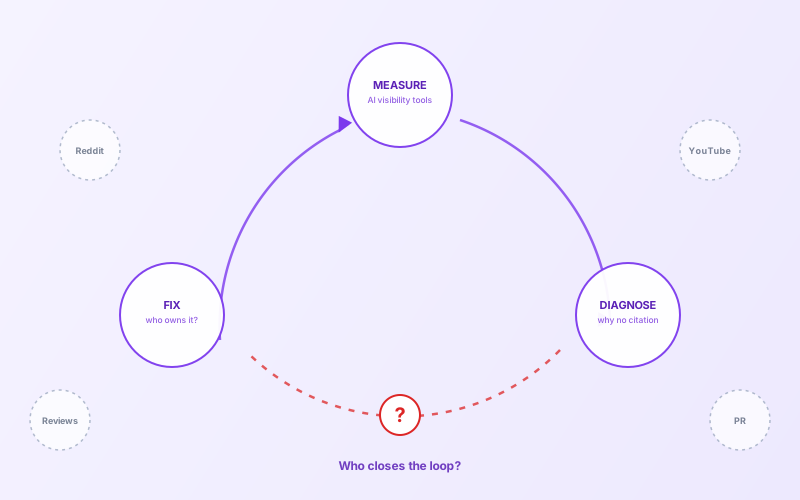
Closing the Loop on AI Search: My Takeaways From Writesonic's AEO Webinar
Notes from Writesonic's webinar on AI search revenue, featuring data from roughly 2 billion AI chat conversations and 18+ years of hands-on search experience from SOZO. Seven takeaways, and the question I can't stop asking: who actually closes the loop between AI visibility data and the fixes that live outside the dashboard?
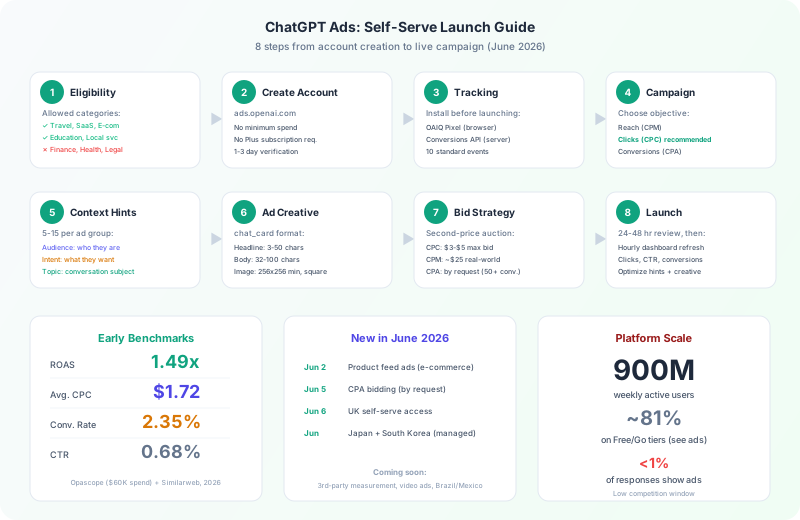
How to Launch ChatGPT Ads: A Step-by-Step Guide to the Self-Serve Platform in 2026
A practical walkthrough for setting up your first ChatGPT ad campaign, from account creation to conversion tracking. Covers eligibility, context hints, bidding, creative specs, and what the early benchmarks show after $60K in tracked spend.
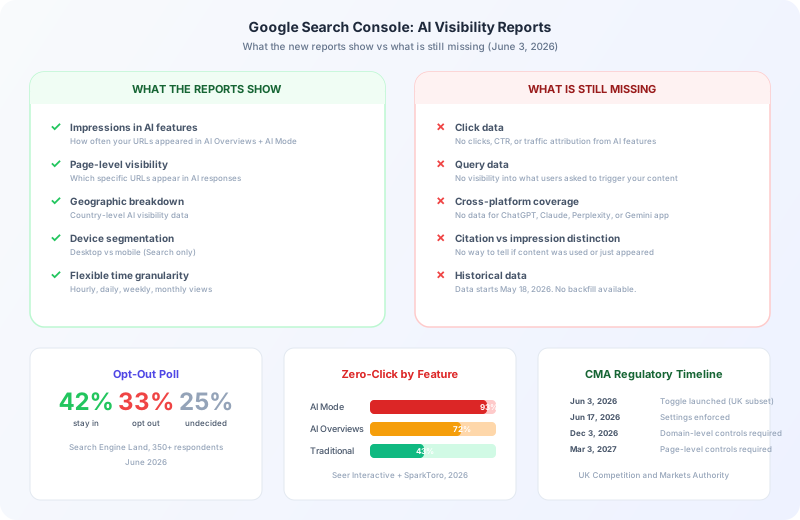
Google Just Built the AI Visibility Tool It Said It Would Not Build. Here Is What the Data Shows (and What It Does Not).
On June 3, 2026, Google launched Generative AI performance reports in Search Console and an opt-out toggle that removes your site from AI Overviews and AI Mode without affecting organic rankings. The reports show impressions but not clicks. Here is what the new data means, who should opt out, and what is still missing.
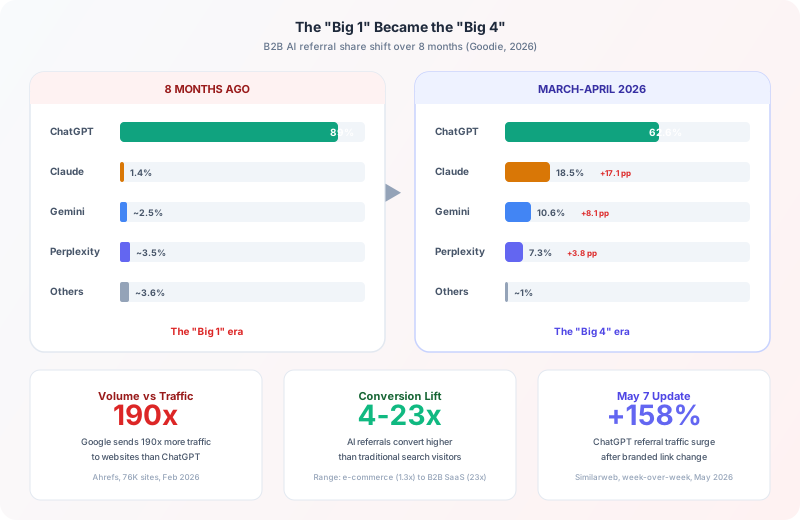
ChatGPT Is No Longer the Only AI Search Engine That Matters. Here Is What the Data Shows.
Eight months ago, ChatGPT held 89% of B2B AI referrals. Today it holds 63%. Claude surged to 18.5%, Gemini quadrupled, and Perplexity more than doubled. The "Big 1" has become the "Big 4," and a single-platform AI visibility strategy no longer covers the market.
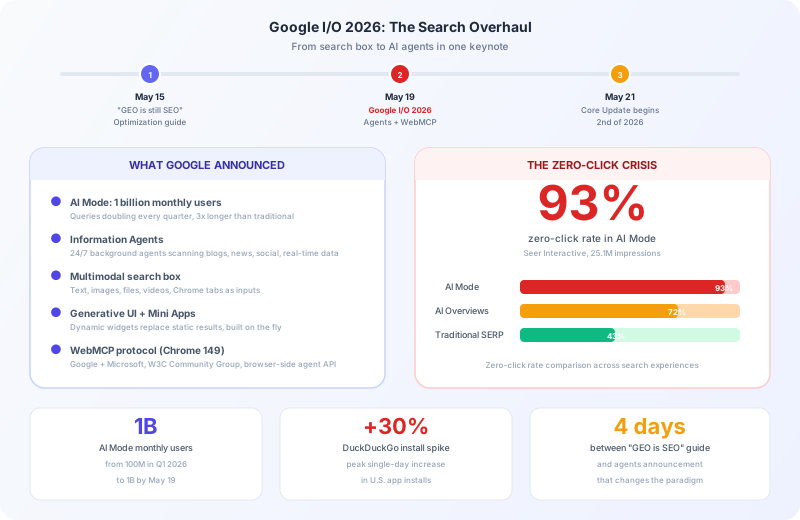
Google I/O 2026 Replaced the Search Box With AI Agents. Here Is What That Means for Visibility.
Four days after telling the industry that GEO is "still SEO," Google announced always-on information agents, a redesigned search box, and generative UI experiences. AI Mode now has 1 billion users and a 93% zero-click rate. Here is what changed and what it means.
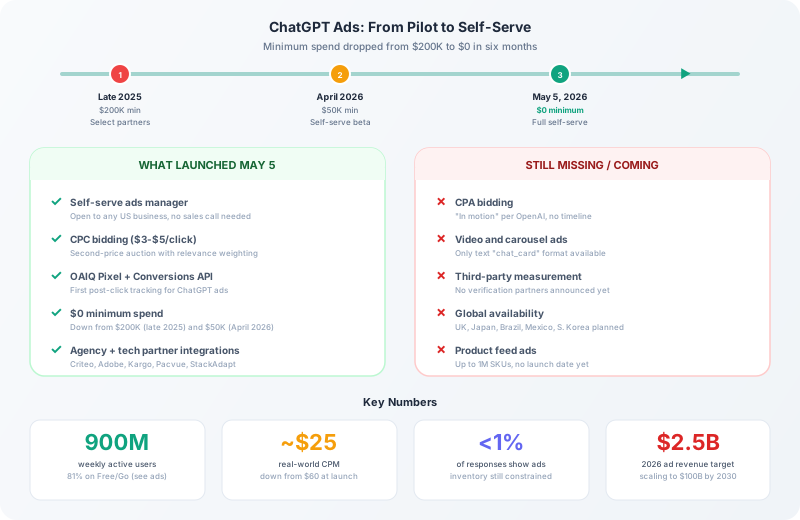
ChatGPT Ads Dropped the $50K Minimum. Here Is What the Self-Serve Platform Looks Like.
On May 5, 2026, OpenAI launched a self-serve ads manager, eliminated the minimum spend, added CPC bidding, and shipped conversion tracking. Two weeks in, here is what the platform includes, what is still missing, and what it means for advertisers.
Frequently asked questions
What is the difference between AEO and SEO?
SEO optimizes for ranking in a list of search results. AEO optimizes for being selected as the direct answer by AI platforms. SEO aims for a top-10 position; AEO aims for being the singular source an AI cites. Both disciplines complement each other, and strong SEO provides a foundation for AEO success.
Which AI platforms does AEO apply to?
AEO applies to all platforms that provide direct answers to user questions: ChatGPT, Perplexity, Google AI Overviews, Claude, Gemini, Microsoft Copilot, and emerging vertical AI assistants. The principles are universal, though each platform has unique characteristics.
How long does it take to see results from AEO?
For platforms with real-time web search (Perplexity, ChatGPT with browsing, Copilot), content changes can begin affecting visibility within days to weeks. For platforms relying on training data (Claude, base Gemini), the timeline is longer and tied to model update cycles.
Is AEO only for informational queries?
No. AEO applies to any query where an AI platform might provide a direct answer, including product recommendations, service comparisons, how-to questions, and commercial queries. Some of the highest-value AEO opportunities are in commercial and transactional categories.
Do I need different content for AEO versus SEO?
Not necessarily. The same content can serve both AEO and SEO goals. The key differences are structural: AEO content needs clearer question-answer formatting, more direct language, comprehensive FAQ sections, and stronger schema markup.
Stay ahead of AI visibility trends
Get weekly insights on AEO, GEO, and AI platform changes delivered to your inbox.
No spam. Unsubscribe anytime.