The definitive resource for brand visibility in the age of AI search
Expert guides, strategies, and insights on getting your brand cited by AI search engines and assistants.
Stay ahead of the curve
Weekly insights on AEO, GEO, and AI platform changes. No spam.
No spam. Unsubscribe anytime.
Featured Articles
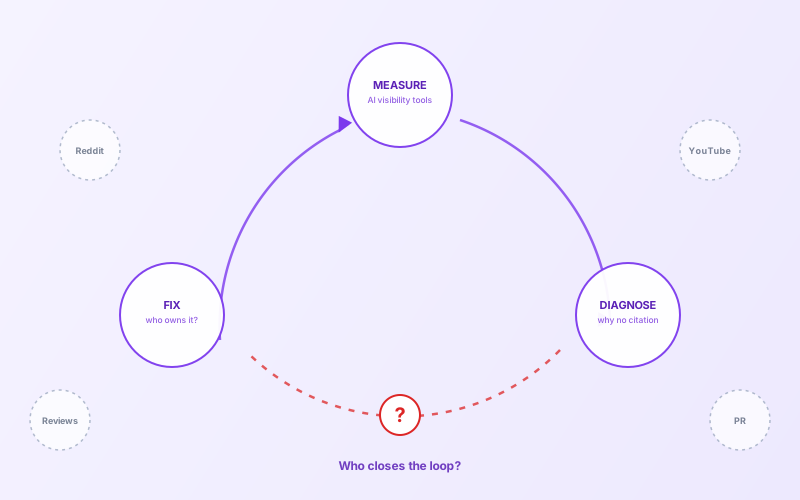
Closing the Loop on AI Search: My Takeaways From Writesonic's AEO Webinar
Notes from Writesonic's webinar on AI search revenue, featuring data from roughly 2 billion AI chat conversations and 18+ years of hands-on search experience from SOZO. Seven takeaways, and the question I can't stop asking: who actually closes the loop between AI visibility data and the fixes that live outside the dashboard?
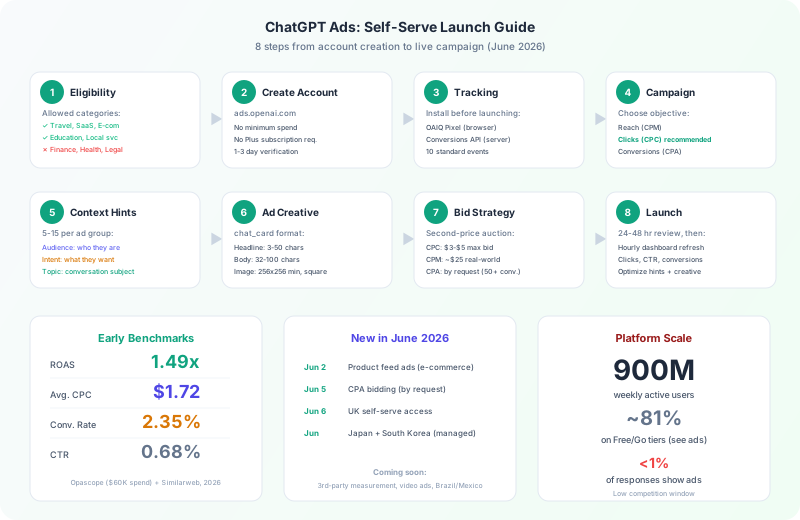
How to Launch ChatGPT Ads: A Step-by-Step Guide to the Self-Serve Platform in 2026
A practical walkthrough for setting up your first ChatGPT ad campaign, from account creation to conversion tracking. Covers eligibility, context hints, bidding, creative specs, and what the early benchmarks show after $60K in tracked spend.
Latest Articles
View all →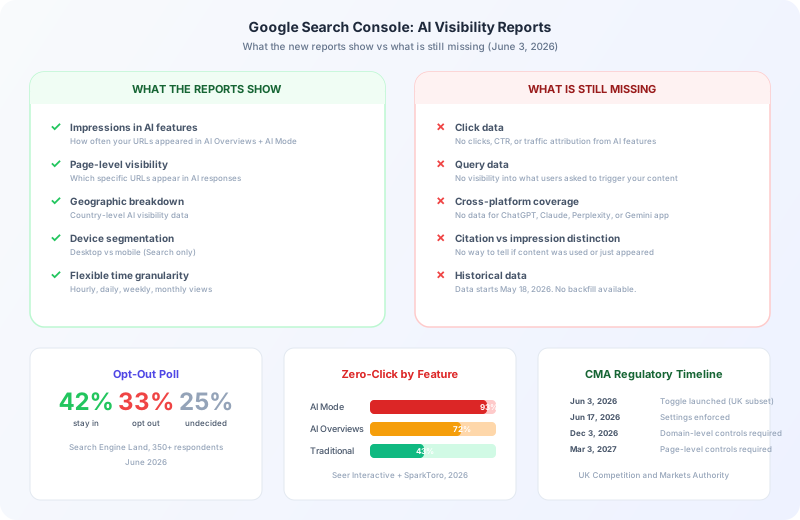
Google Just Built the AI Visibility Tool It Said It Would Not Build. Here Is What the Data Shows (and What It Does Not).
On June 3, 2026, Google launched Generative AI performance reports in Search Console and an opt-out toggle that removes your site from AI Overviews and AI Mode without affecting organic rankings. The reports show impressions but not clicks. Here is what the new data means, who should opt out, and what is still missing.
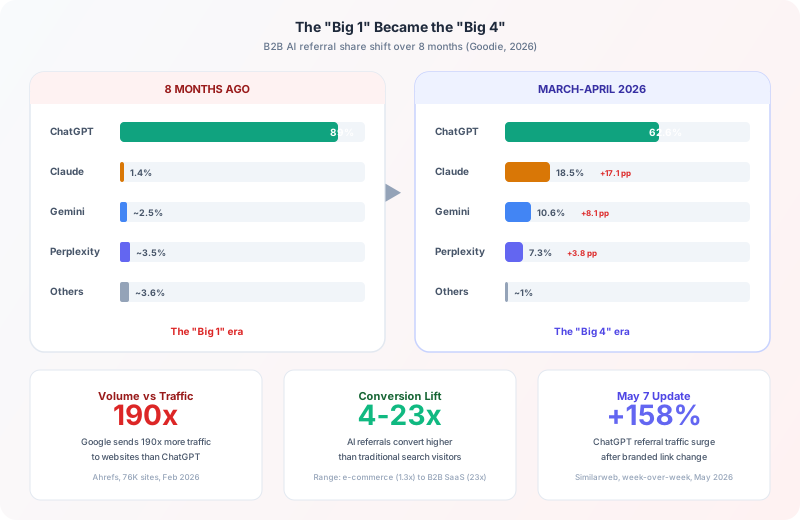
ChatGPT Is No Longer the Only AI Search Engine That Matters. Here Is What the Data Shows.
Eight months ago, ChatGPT held 89% of B2B AI referrals. Today it holds 63%. Claude surged to 18.5%, Gemini quadrupled, and Perplexity more than doubled. The "Big 1" has become the "Big 4," and a single-platform AI visibility strategy no longer covers the market.
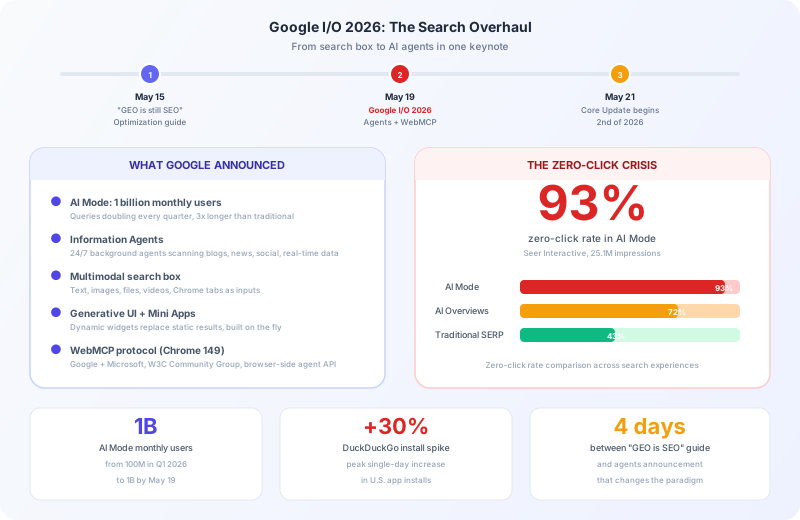
Google I/O 2026 Replaced the Search Box With AI Agents. Here Is What That Means for Visibility.
Four days after telling the industry that GEO is "still SEO," Google announced always-on information agents, a redesigned search box, and generative UI experiences. AI Mode now has 1 billion users and a 93% zero-click rate. Here is what changed and what it means.
Explore by Topic
AEO
Get your brand selected as the direct answer by AI platforms.
GEO
Maximize brand visibility across all generative AI platforms.
Content Strategy
Create content that AI platforms want to cite and recommend.
Technical
Schema, crawlers, and structured data for AI discoverability.
Analytics
Measure and benchmark your AI visibility performance.
The search landscape has fundamentally changed
For two decades, "getting found online" meant one thing: ranking on Google. Today, a quiet revolution is reshaping how people discover brands, compare products, and make decisions. AI-powered answer engines are becoming the first place people turn for answers.
Traditional SEO still matters, but it's no longer the whole picture. AI platforms don't serve up ten blue links. They synthesize a single, authoritative answer. If your brand isn't part of that answer, you're invisible to a fast-growing audience that may never visit a traditional search results page.
This publication exists to help you navigate that shift. We cover the strategies, frameworks, and practical tactics you need to ensure your brand is visible, cited, and recommended wherever AI is answering questions about your industry.
Stay ahead of AI visibility trends
Get weekly insights on AEO, GEO, and AI platform changes delivered to your inbox.
No spam. Unsubscribe anytime.
Frequently asked questions about AI visibility
What is AI visibility and why does it matter?
AI visibility refers to how your brand appears in AI-generated responses from platforms like ChatGPT, Perplexity, Google Gemini, and others. As more people use AI assistants for research and purchasing decisions, your presence in these responses directly impacts discovery, trust, and revenue.
What is the difference between AEO and GEO?
AEO (Answer Engine Optimization) focuses on optimizing content so AI platforms select your brand as a direct answer. GEO (Generative Engine Optimization) is broader. It encompasses all strategies to improve your visibility within AI-generated content, including citations, mentions, and recommendations.
How do AI platforms decide which brands to mention?
AI platforms synthesize answers from their training data and, in some cases, live web retrieval. They prioritize content that is authoritative, well-structured, directly answers questions, and comes from credible sources. Structured data, FAQ markup, and clear topical authority all improve your chances of being cited.
Is traditional SEO still relevant in the age of AI search?
Yes, but it is no longer sufficient on its own. Traditional SEO optimizes for ranked lists of links. AI visibility requires a different approach: structured content, direct answers, schema markup, and authority signals that AI models can easily parse and cite.
Which AI platforms should I focus on?
The landscape is growing rapidly, but the major platforms to consider include ChatGPT, Google Gemini (with AI Overviews), Perplexity AI, Anthropic Claude, Microsoft Copilot, and emerging vertical AI assistants. Optimizing for one generally improves visibility across all of them.
How do I get started with AI visibility optimization?
Start by auditing your current AI presence. Search for your brand on the major AI platforms. Then implement structured data markup, create FAQ content, optimize your headings for common questions, and build topical authority through comprehensive guides. Our blog covers each of these steps in detail.