Generative Engine Optimization
GEOThe comprehensive strategy for maximizing brand visibility across all generative AI platforms
Generative Engine Optimization (GEO) is the umbrella discipline encompassing all strategies to improve your brand's visibility, citations, and representation within AI-generated content. While AEO focuses specifically on direct answers, GEO covers the full spectrum: mentions, citations, recommendations, sentiment, and contextual references across every AI platform.
The GEO framework
Audit your current AI visibility
Before optimizing, establish your baseline. Query each major AI platform with brand-relevant prompts and document how (and whether) your brand appears. Note whether you are cited, mentioned, recommended, or absent entirely. Identify competitive gaps.
Optimize owned content for AI consumption
Restructure your website content to be easily parsed by AI systems: clear headings, direct answers, structured data, comprehensive FAQ sections, and authoritative language. Every page should be able to stand alone as a citable source.
Build your third-party presence
AI platforms form brand opinions from far more than your website. Actively manage your presence on review sites, Wikipedia, industry publications, social platforms, and forums. Ensure consistent, positive, and accurate brand information across all third-party sources.
Enable AI crawler access
Configure your robots.txt to allow AI-specific crawlers: GPTBot (OpenAI), ClaudeBot (Anthropic), PerplexityBot, Google-Extended (Gemini training), and Bingbot (Copilot). Each crawler feeds a different AI platform.
Implement continuous monitoring
Deploy GEO tracking tools to monitor brand mentions, citations, sentiment, and competitive positioning across AI platforms over time. Track trends rather than individual data points, and use directional insights to guide ongoing optimization.
Articles about GEO
View all →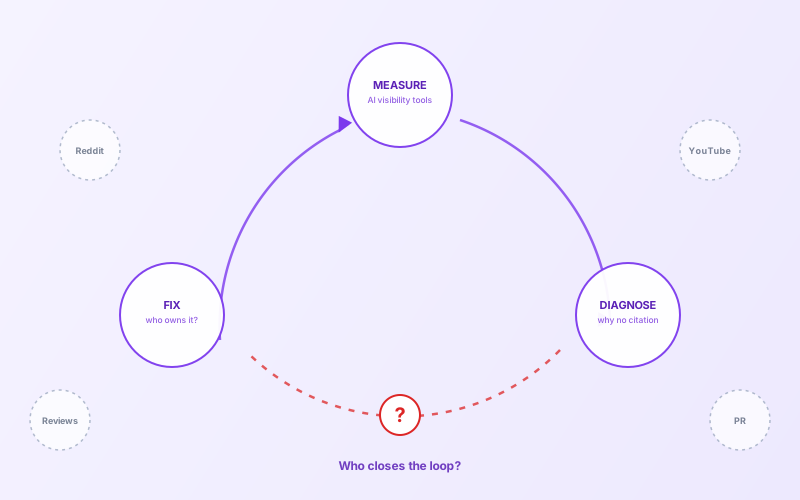
Closing the Loop on AI Search: My Takeaways From Writesonic's AEO Webinar
Notes from Writesonic's webinar on AI search revenue, featuring data from roughly 2 billion AI chat conversations and 18+ years of hands-on search experience from SOZO. Seven takeaways, and the question I can't stop asking: who actually closes the loop between AI visibility data and the fixes that live outside the dashboard?
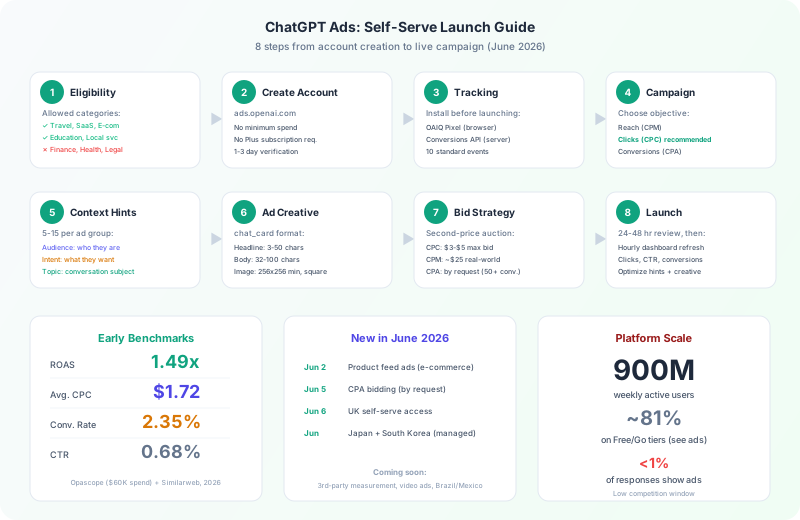
How to Launch ChatGPT Ads: A Step-by-Step Guide to the Self-Serve Platform in 2026
A practical walkthrough for setting up your first ChatGPT ad campaign, from account creation to conversion tracking. Covers eligibility, context hints, bidding, creative specs, and what the early benchmarks show after $60K in tracked spend.
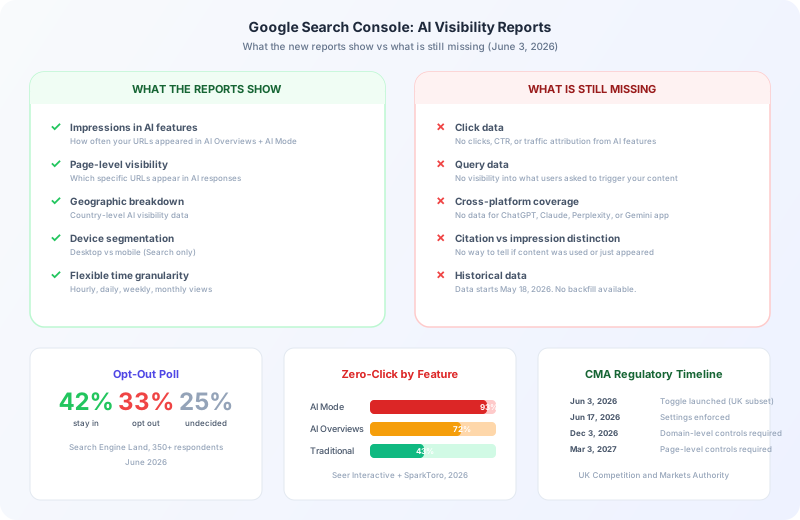
Google Just Built the AI Visibility Tool It Said It Would Not Build. Here Is What the Data Shows (and What It Does Not).
On June 3, 2026, Google launched Generative AI performance reports in Search Console and an opt-out toggle that removes your site from AI Overviews and AI Mode without affecting organic rankings. The reports show impressions but not clicks. Here is what the new data means, who should opt out, and what is still missing.
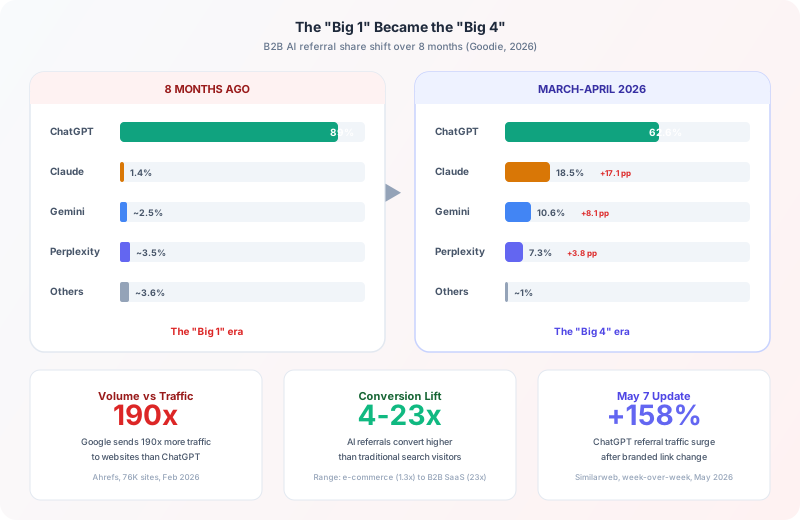
ChatGPT Is No Longer the Only AI Search Engine That Matters. Here Is What the Data Shows.
Eight months ago, ChatGPT held 89% of B2B AI referrals. Today it holds 63%. Claude surged to 18.5%, Gemini quadrupled, and Perplexity more than doubled. The "Big 1" has become the "Big 4," and a single-platform AI visibility strategy no longer covers the market.
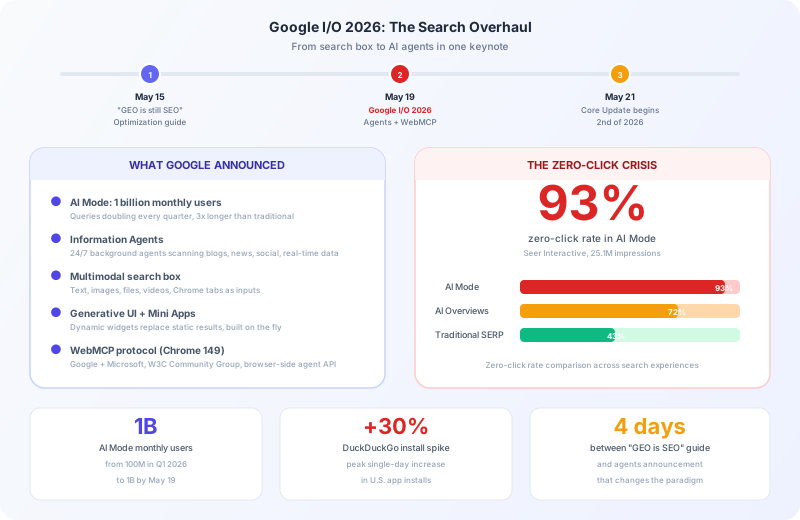
Google I/O 2026 Replaced the Search Box With AI Agents. Here Is What That Means for Visibility.
Four days after telling the industry that GEO is "still SEO," Google announced always-on information agents, a redesigned search box, and generative UI experiences. AI Mode now has 1 billion users and a 93% zero-click rate. Here is what changed and what it means.
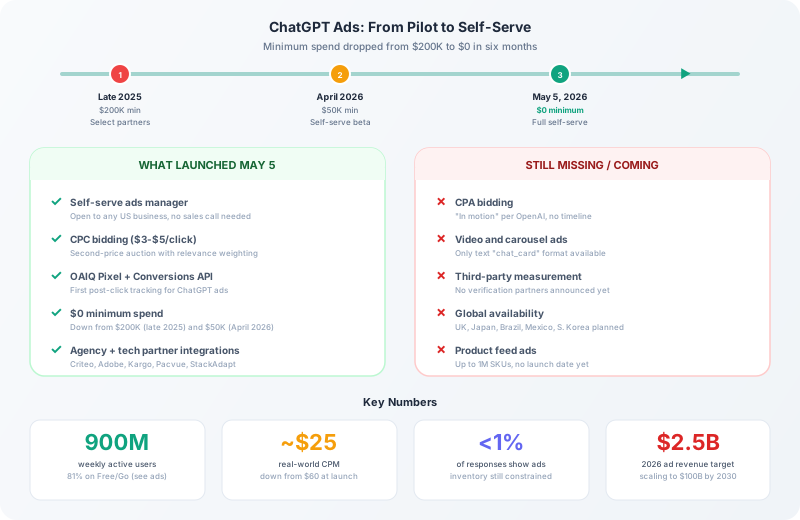
ChatGPT Ads Dropped the $50K Minimum. Here Is What the Self-Serve Platform Looks Like.
On May 5, 2026, OpenAI launched a self-serve ads manager, eliminated the minimum spend, added CPC bidding, and shipped conversion tracking. Two weeks in, here is what the platform includes, what is still missing, and what it means for advertisers.
Frequently asked questions
What is the relationship between GEO and AEO?
AEO is a subset of GEO. AEO specifically focuses on being selected as the direct answer to a question. GEO is the broader discipline that includes answer optimization, citation earning, brand sentiment management, competitive monitoring, and visibility across all types of AI-generated content.
How is GEO different from traditional SEO?
SEO optimizes for ranking in a list of links. GEO optimizes for being cited, mentioned, or recommended within AI-generated text. GEO requires a broader approach: not just website optimization, but third-party presence management, entity consistency, and structured content that AI systems can easily parse and cite.
Can I do GEO without doing SEO?
Not effectively. Strong traditional SEO provides the foundation for GEO success. Many AI platforms (Perplexity, Copilot, Google AI Overviews, Gemini) draw from web search results, so organic search visibility directly feeds AI visibility. GEO builds on top of SEO; it does not replace it.
What tools exist for GEO tracking and measurement?
The GEO tool market is still maturing. Current options include specialized platforms and features within broader SEO tools. Most work by sending test prompts to AI platforms and recording which brands are cited. The data is directional, not perfect.
How much does GEO cost to implement?
GEO doesn't require a separate budget so much as a shift in existing content and SEO strategy. The core work (content restructuring, schema markup, third-party presence management) builds on existing marketing efforts. GEO tracking tools range from free manual methods to $200-500/month for dedicated platforms.
Stay ahead of AI visibility trends
Get weekly insights on AEO, GEO, and AI platform changes delivered to your inbox.
No spam. Unsubscribe anytime.