Analytics & Measurement
How to measure, track, and benchmark your brand's AI visibility performance
Measuring AI visibility is one of the most challenging aspects of the discipline. Unlike traditional SEO where rank positions and click-through rates are well-established metrics, AI visibility measurement is still maturing. The data is imperfect, the tools are evolving, and the methodology has inherent limitations. Understanding what you can measure, what you cannot, and how to make decisions despite uncertainty is critical.
The Analytics & Measurement framework
Define your measurement baseline
Before tracking trends, establish your current AI visibility. Query each major platform with 20-30 brand-relevant prompts and record whether your brand is cited, mentioned, recommended, or absent. Document competitor visibility for the same queries.
Select and deploy tracking tools
Choose GEO tracking tools that monitor the AI platforms relevant to your industry. Understand each tool's methodology (API-based vs. UI-based), update frequency, and limitations. Consider using multiple tools for cross-validation.
Build your prompt library
The queries you track determine the insights you get. Build prompts from actual customer questions (search data, support logs, sales calls), not just internal assumptions. Include brand, category, comparison, and recommendation queries.
Track directional trends over time
Individual data points are noisy. Focus on trends across weeks and months: overall visibility direction, competitive share shifts, platform-specific patterns, and the impact of content changes. Treat the data as directional guidance, not precise measurement.
Correlate with downstream business metrics
Connect AI visibility trends to business outcomes where possible: website traffic from AI referrers, brand search volume changes, and pipeline or revenue metrics. This connection, even if imperfect, helps justify continued investment.
Articles about Analytics & Measurement
View all →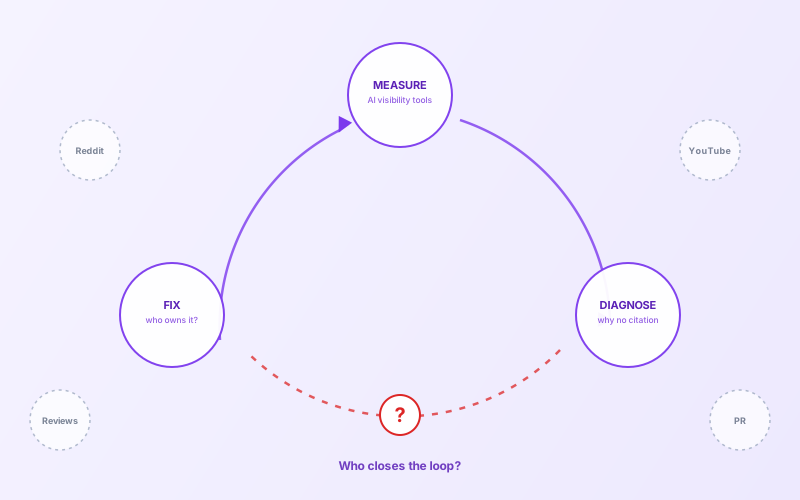
Closing the Loop on AI Search: My Takeaways From Writesonic's AEO Webinar
Notes from Writesonic's webinar on AI search revenue, featuring data from roughly 2 billion AI chat conversations and 18+ years of hands-on search experience from SOZO. Seven takeaways, and the question I can't stop asking: who actually closes the loop between AI visibility data and the fixes that live outside the dashboard?
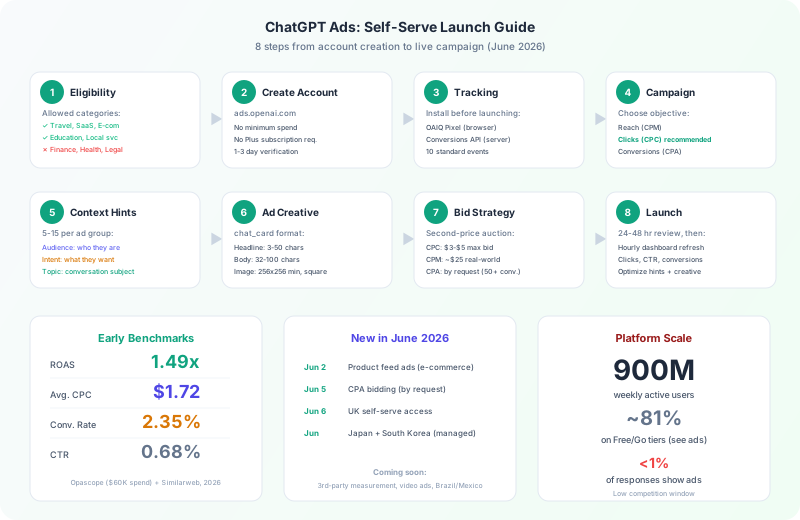
How to Launch ChatGPT Ads: A Step-by-Step Guide to the Self-Serve Platform in 2026
A practical walkthrough for setting up your first ChatGPT ad campaign, from account creation to conversion tracking. Covers eligibility, context hints, bidding, creative specs, and what the early benchmarks show after $60K in tracked spend.
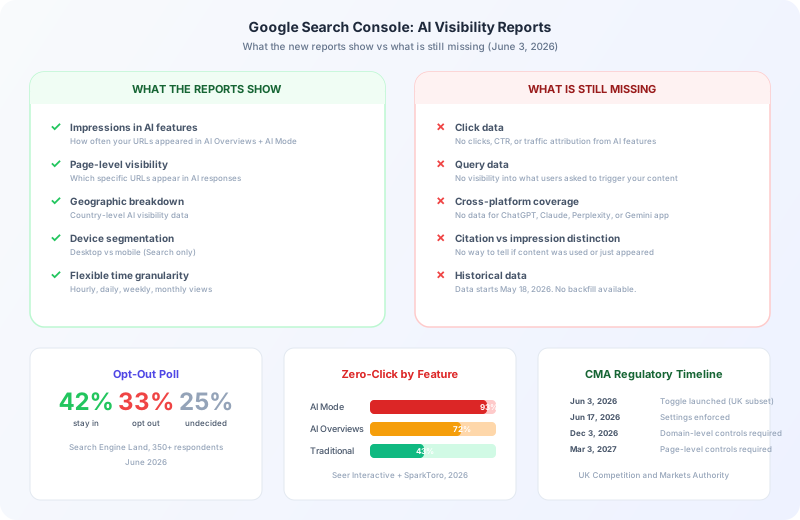
Google Just Built the AI Visibility Tool It Said It Would Not Build. Here Is What the Data Shows (and What It Does Not).
On June 3, 2026, Google launched Generative AI performance reports in Search Console and an opt-out toggle that removes your site from AI Overviews and AI Mode without affecting organic rankings. The reports show impressions but not clicks. Here is what the new data means, who should opt out, and what is still missing.
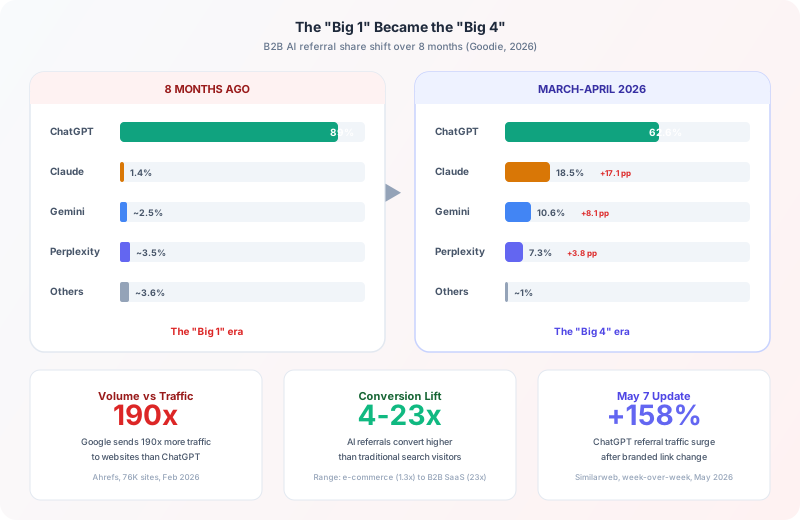
ChatGPT Is No Longer the Only AI Search Engine That Matters. Here Is What the Data Shows.
Eight months ago, ChatGPT held 89% of B2B AI referrals. Today it holds 63%. Claude surged to 18.5%, Gemini quadrupled, and Perplexity more than doubled. The "Big 1" has become the "Big 4," and a single-platform AI visibility strategy no longer covers the market.
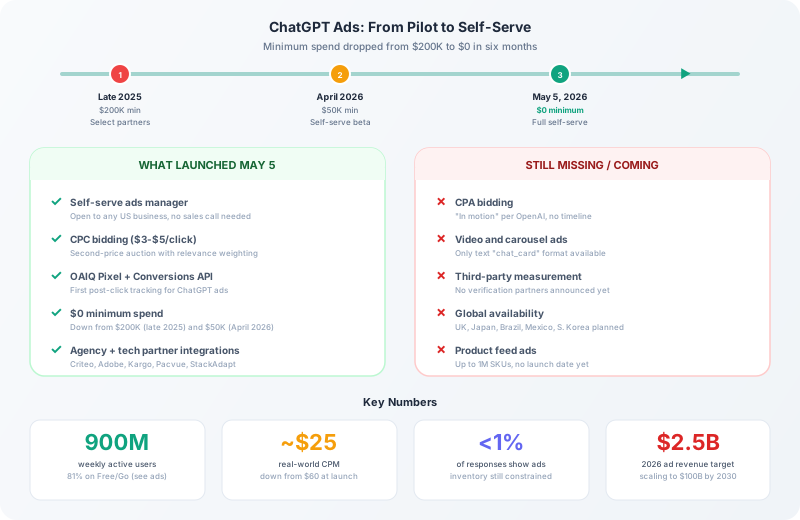
ChatGPT Ads Dropped the $50K Minimum. Here Is What the Self-Serve Platform Looks Like.
On May 5, 2026, OpenAI launched a self-serve ads manager, eliminated the minimum spend, added CPC bidding, and shipped conversion tracking. Two weeks in, here is what the platform includes, what is still missing, and what it means for advertisers.
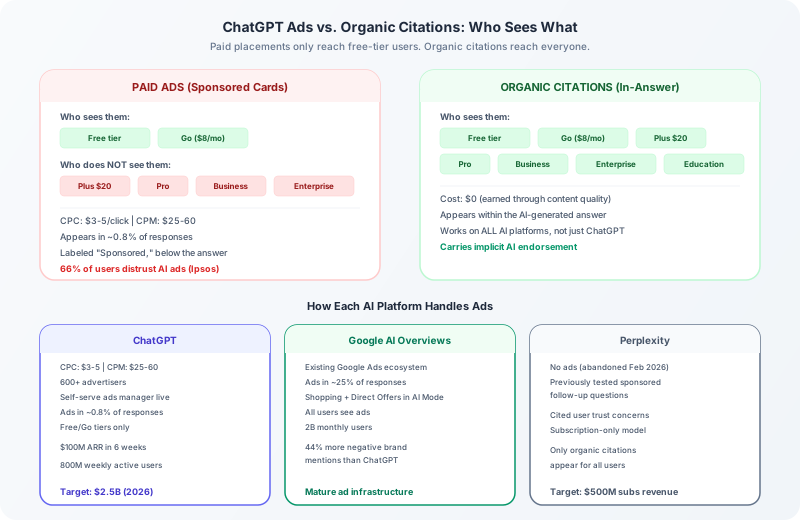
ChatGPT Now Sells Ads at $3 to $5 Per Click. Here Is Everything We Know So Far.
OpenAI launched self-serve CPC ads inside ChatGPT with 600+ advertisers, $3 to $5 per click pricing, and a new ads manager. Here is how the ad platform works, what brands are paying, and what the early data shows.
Frequently asked questions
How accurate are AI visibility tracking tools?
Current tools provide directional data, not precise measurement. API-based tools query platforms programmatically, which can produce different results than what real users see. The data is useful for tracking trends and competitive positioning, but should be treated as approximate.
What metrics should I track for AI visibility?
Key metrics include: mention frequency (how often your brand appears), citation rate (how often you are cited as a source), sentiment (positive/negative mentions), share of voice (your visibility vs. competitors), and platform coverage (which AI platforms cite you).
Can I track AI referral traffic in Google Analytics?
Partially. Some AI platforms generate identifiable referral traffic (perplexity.ai, bing.com for Copilot). ChatGPT traffic is harder to isolate. Set up custom channel groupings for known AI referrers and monitor for new sources.
How often should I check AI visibility metrics?
Weekly monitoring is sufficient for most brands. AI visibility shifts gradually, not overnight. Monthly reporting provides the best trend visibility. Avoid daily checking, which amplifies noise without revealing meaningful patterns.
Stay ahead of AI visibility trends
Get weekly insights on AEO, GEO, and AI platform changes delivered to your inbox.
No spam. Unsubscribe anytime.