Claude
How to build brand presence in Anthropic's AI assistant, now with full web search via Brave
How Claude sources and selects content
Claude generates responses using a combination of its training data and real-time web search powered by Brave Search. When a query requires current information, Claude reformulates it into search-friendly queries, retrieves results from Brave, and synthesizes an answer with inline clickable source links. Claude can autonomously decide when to search and can conduct multiple sequential searches to refine results.
Claude's use of Brave Search as its backend creates a distinct source selection profile. BrightEdge research found an 86.7% overlap between Claude's cited results and Brave's top non-sponsored results. Only 20% of Claude's citations overlap with ChatGPT's (which uses Bing). This means content that ranks well in Brave may surface in Claude but not in ChatGPT, and vice versa.
Claude is known for cautious, nuanced responses. It tends to hedge more than other AI assistants and is less likely to make definitive brand recommendations without strong evidence. Content that demonstrates genuine expertise, includes specific data, and avoids promotional language tends to be better reflected in Claude's responses.
How to optimize for Claude
Optimize for Brave Search visibility
Claude uses Brave Search as its backend. Content that ranks well in Brave is more likely to be cited by Claude. Brave's ranking algorithm differs from Google and Bing, so check your Brave visibility separately. Brave indexes content from its own crawler and the Brave Search API.
Build broad web presence across authoritative sources
Claude synthesizes information from multiple sources during both training and real-time search. Industry publications, Wikipedia, academic citations, and established review platforms all strengthen your brand presence in Claude's responses.
Create genuinely authoritative, expert-level content
Claude values depth and accuracy. Publish detailed technical content, original research, comprehensive guides, and expert analysis. Content that would satisfy a domain expert is more likely to be reflected in Claude's responses.
Ensure factual consistency across all web properties
Claude synthesizes information from multiple sources. If your company description, product features, or leadership team differ across your website, LinkedIn, Crunchbase, and Wikipedia, Claude may produce confused or inaccurate brand mentions.
Use precise, unambiguous language
Claude is trained to be careful and accurate. Content written in precise, unambiguous language with clear definitions and specific claims is more likely to be accurately represented than marketing-speak or vague superlatives.
Keep content fresh for search-grounded queries
With web search enabled, Claude can find and cite recently published content. Add visible "last updated" dates, refresh key statistics, and publish timely content. This is a change from the earlier training-data-only era where freshness mattered less for Claude.
Articles about Claude
View all →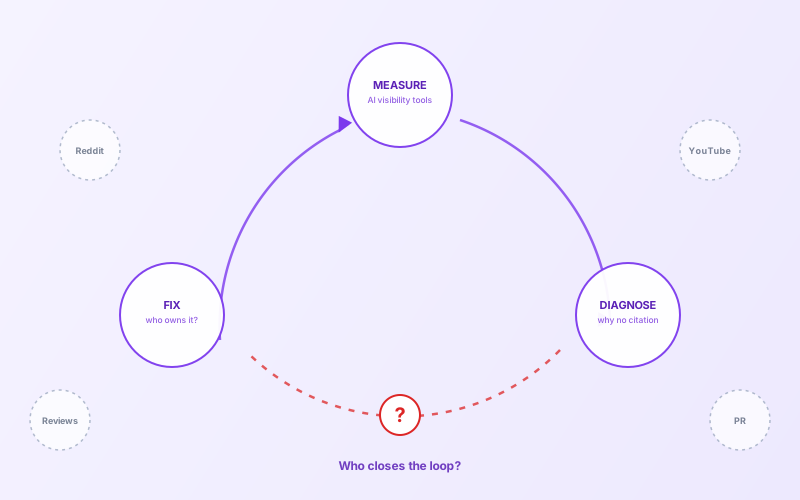
Closing the Loop on AI Search: My Takeaways From Writesonic's AEO Webinar
Notes from Writesonic's webinar on AI search revenue, featuring data from roughly 2 billion AI chat conversations and 18+ years of hands-on search experience from SOZO. Seven takeaways, and the question I can't stop asking: who actually closes the loop between AI visibility data and the fixes that live outside the dashboard?
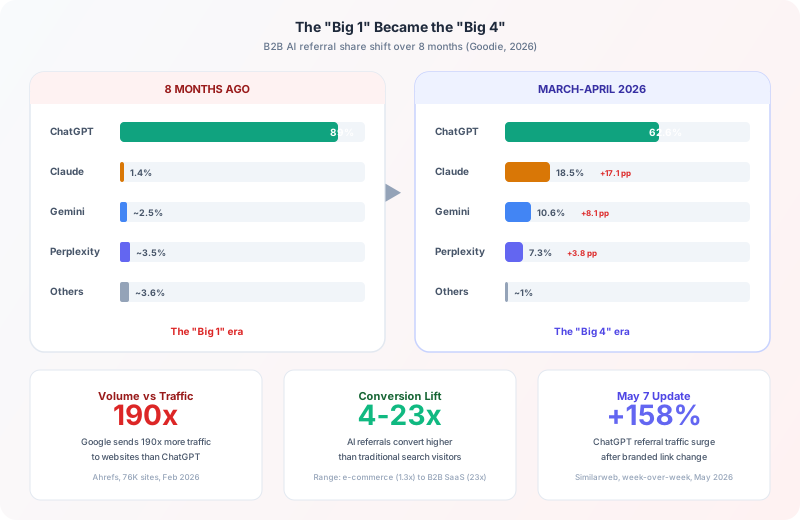
ChatGPT Is No Longer the Only AI Search Engine That Matters. Here Is What the Data Shows.
Eight months ago, ChatGPT held 89% of B2B AI referrals. Today it holds 63%. Claude surged to 18.5%, Gemini quadrupled, and Perplexity more than doubled. The "Big 1" has become the "Big 4," and a single-platform AI visibility strategy no longer covers the market.
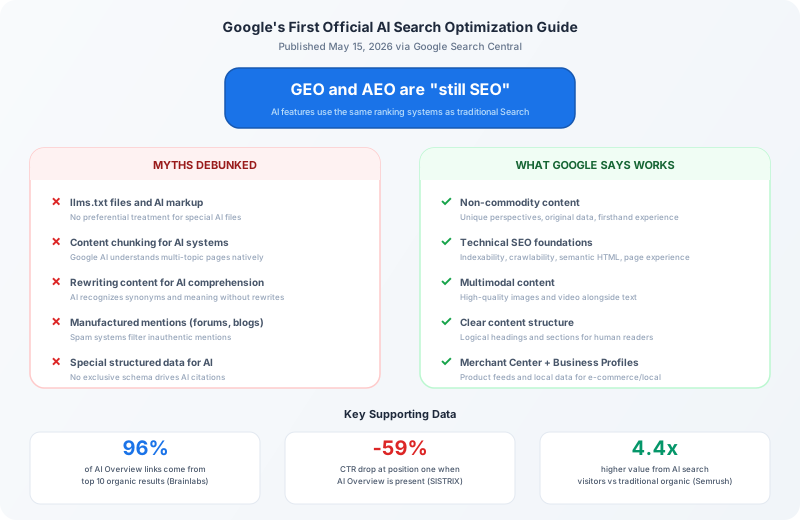
Google Just Published Its First AI Search Optimization Guide. Here Is What It Says.
On May 15, 2026, Google released an official guide to optimizing for AI Overviews and AI Mode. The headline: GEO and AEO are "still SEO." Here is everything the guide recommends, everything it debunks, and what the data says about whether Google is right.
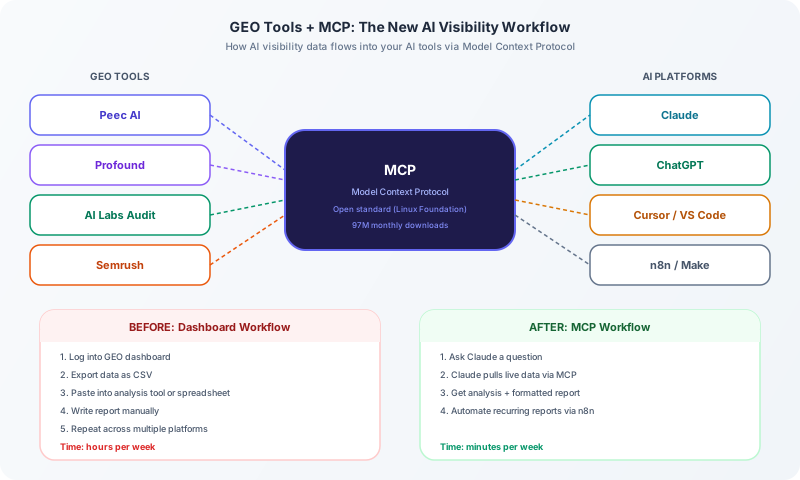
GEO Tools Are Moving Into Your AI Workflow. Here Is What That Changes.
Peec AI, Profound, Semrush, and others are shipping MCP connectors that pipe AI visibility data directly into Claude and ChatGPT. Instead of switching between dashboards, the data comes to you.
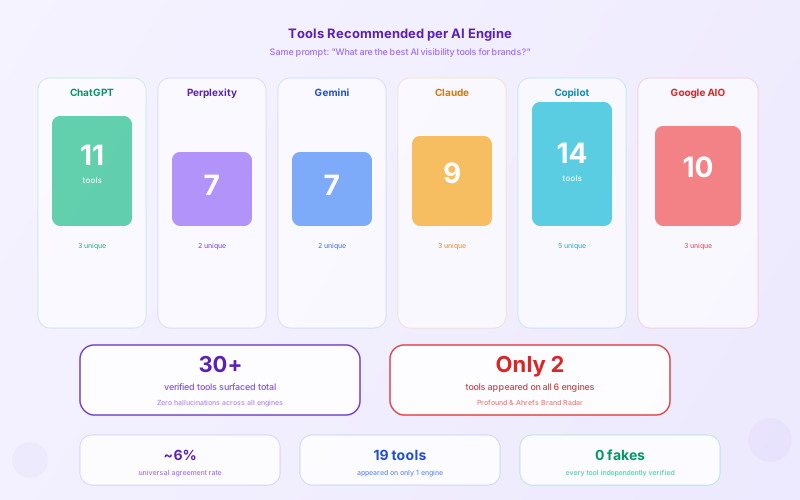
I Asked 6 AI Engines to Recommend the Best GEO Tools. They Agreed on 2.
I ran the same prompt across ChatGPT, Perplexity, Gemini, Claude, Copilot, and Google AI Overviews. They surfaced 30+ real tools between them, but only 2 appeared on every platform. Here is the full data.
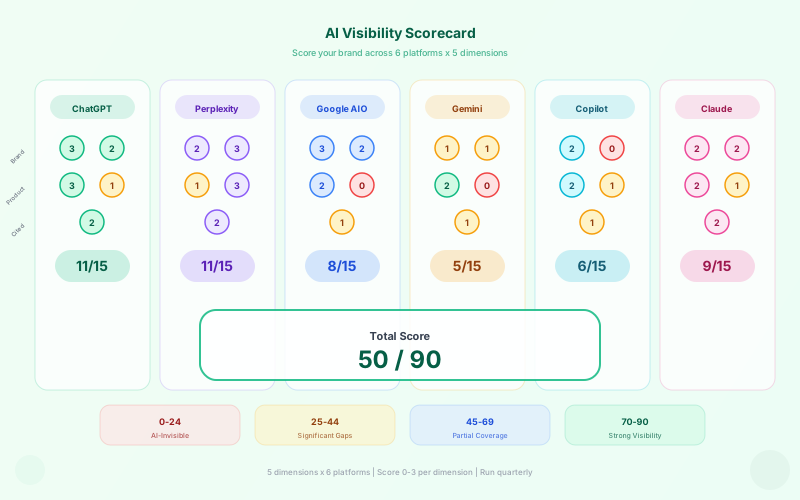
The 2026 AI Visibility Scorecard: How to Audit Your Brand Across 6 Platforms
A step-by-step framework for scoring your brand's AI visibility on ChatGPT, Perplexity, Gemini, Claude, Copilot, and Google AI Overviews. Run this audit in under an hour and know exactly where you stand.
Frequently asked questions
Does Claude browse the web when answering questions?
Yes. Since March 2025, Claude has had full web search capabilities powered by Brave Search. Claude can autonomously decide when to search, conduct multiple searches, and cite sources with inline links. Web search is available on all plans (free and paid) globally as of May 2025.
How can I check what Claude knows about my brand?
Ask Claude directly with web search enabled. Try queries like "What do you know about [brand]?" or "What is [brand] known for?" Compare results with and without web search to see how your brand is represented in both training data and live search results.
What crawlers does Anthropic operate?
Anthropic operates three separate crawlers, each controllable independently via robots.txt: ClaudeBot (collects content for AI model training), Claude-User (fetches pages when individual users ask questions), and Claude-SearchBot (crawls content to improve search result quality). You can allow search indexing while blocking training data collection.
How is optimizing for Claude different from ChatGPT?
The biggest difference is the search backend. Claude uses Brave Search while ChatGPT uses Bing. BrightEdge found only 20% overlap in their citations. Content that ranks well in Brave may not rank well in Bing, and vice versa. Optimizing for both requires checking visibility in both search engines.
Stay ahead of AI visibility trends
Get weekly insights on AEO, GEO, and AI platform changes delivered to your inbox.
No spam. Unsubscribe anytime.