Gemini
How to optimize for Google's multimodal AI assistant and its deep integration with Search
How Gemini sources and selects content
Gemini is uniquely positioned in the AI landscape because it is built by the same company that operates the world's largest search engine. When Gemini answers questions, it can draw from Google Search results, Google's Knowledge Graph, and its own training data simultaneously.
This deep integration with Google's ecosystem means that many of the same factors that determine Google Search rankings also influence Gemini's responses. Strong organic search presence, Knowledge Panel data, and Google Business Profile information all feed into how Gemini represents your brand.
Gemini also powers AI features across Google Workspace (Gmail, Docs, Sheets) and Android devices, making it one of the most distributed AI assistants. Brand visibility in Gemini extends beyond the gemini.google.com interface to contextual suggestions across Google's entire product suite.
How to optimize for Gemini
Leverage your Google ecosystem presence
Optimize your Google Business Profile, maintain an accurate Knowledge Panel, and ensure your Google Merchant Center data is current. Gemini draws from all of these Google data sources when answering brand-related queries.
Maintain strong Google Search rankings
Gemini uses Google Search results as a primary source. Content that ranks well in Google Search is more likely to inform Gemini's responses. Traditional SEO remains the most direct path to Gemini visibility.
Optimize for Google's Knowledge Graph
Implement Organization, Product, and Person schema markup. Ensure your Wikidata and Wikipedia entries are accurate. Google's Knowledge Graph is a key data source for Gemini's entity understanding.
Create content for Google Discover and News
Gemini can reference content from Google News and Discover. Publishing timely, high-quality content that appears in these channels expands your surface area for Gemini citations.
Optimize for multimodal queries
Gemini is a multimodal model that processes images, video, and text. Ensure your visual content has descriptive alt text, captions, and structured data. Product images, infographics, and video transcripts all provide additional content for Gemini to reference.
Articles about Gemini
View all →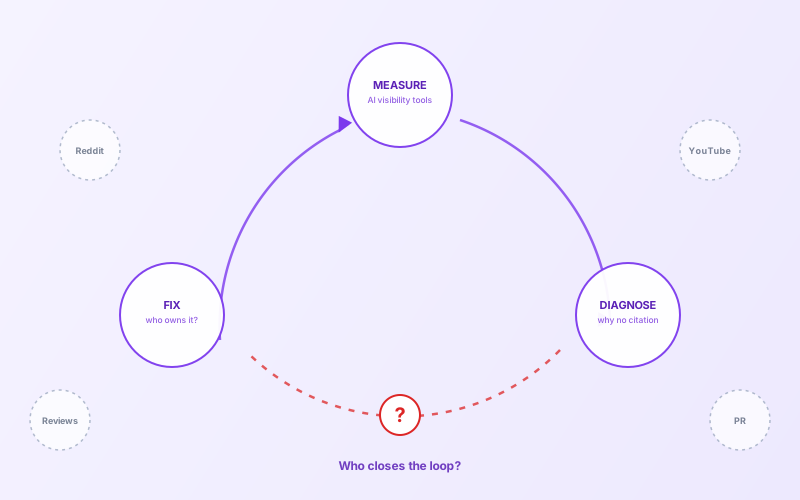
Closing the Loop on AI Search: My Takeaways From Writesonic's AEO Webinar
Notes from Writesonic's webinar on AI search revenue, featuring data from roughly 2 billion AI chat conversations and 18+ years of hands-on search experience from SOZO. Seven takeaways, and the question I can't stop asking: who actually closes the loop between AI visibility data and the fixes that live outside the dashboard?
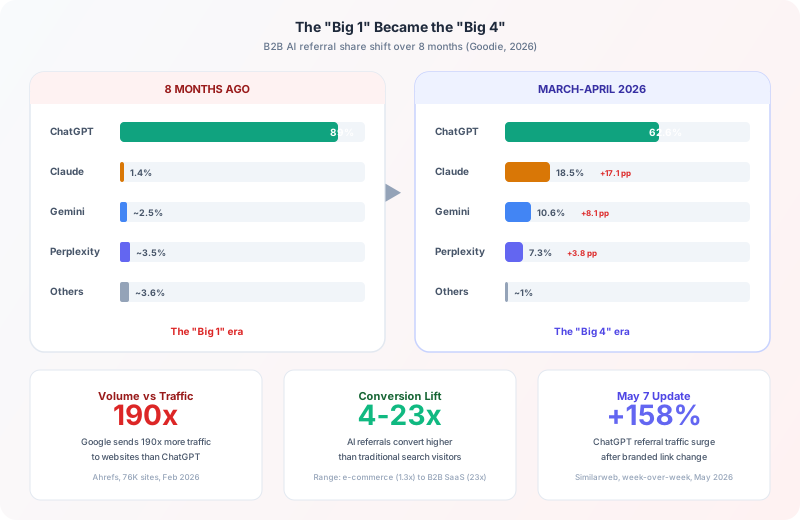
ChatGPT Is No Longer the Only AI Search Engine That Matters. Here Is What the Data Shows.
Eight months ago, ChatGPT held 89% of B2B AI referrals. Today it holds 63%. Claude surged to 18.5%, Gemini quadrupled, and Perplexity more than doubled. The "Big 1" has become the "Big 4," and a single-platform AI visibility strategy no longer covers the market.
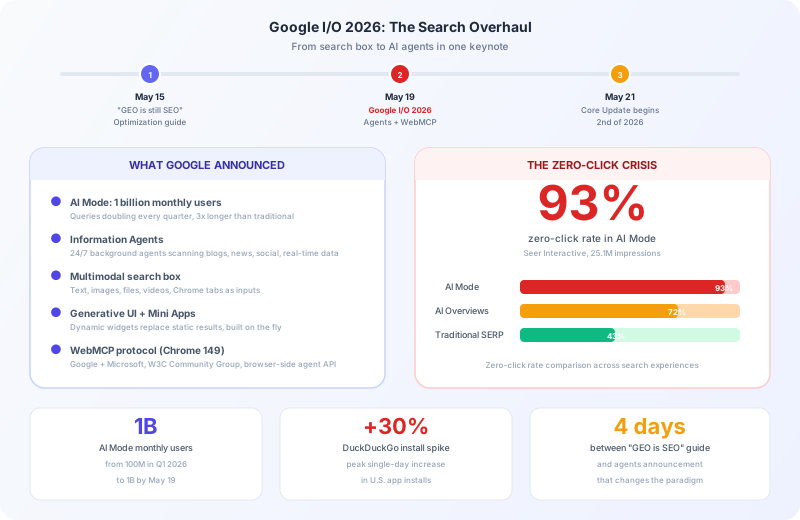
Google I/O 2026 Replaced the Search Box With AI Agents. Here Is What That Means for Visibility.
Four days after telling the industry that GEO is "still SEO," Google announced always-on information agents, a redesigned search box, and generative UI experiences. AI Mode now has 1 billion users and a 93% zero-click rate. Here is what changed and what it means.
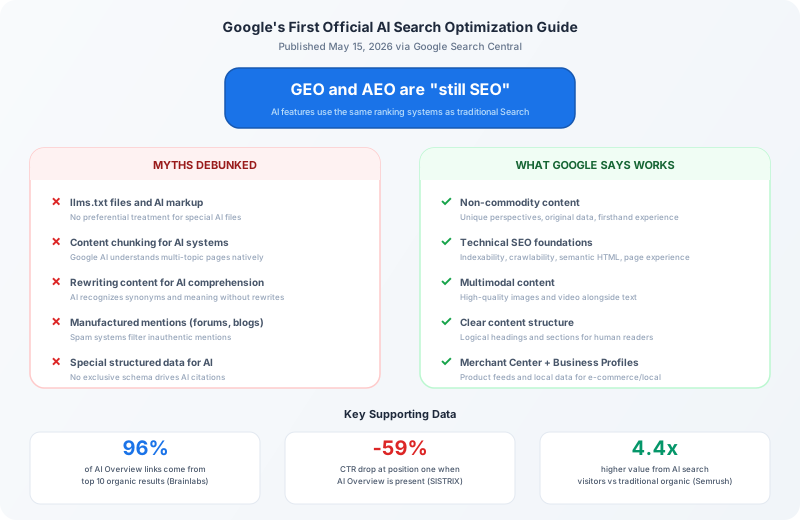
Google Just Published Its First AI Search Optimization Guide. Here Is What It Says.
On May 15, 2026, Google released an official guide to optimizing for AI Overviews and AI Mode. The headline: GEO and AEO are "still SEO." Here is everything the guide recommends, everything it debunks, and what the data says about whether Google is right.
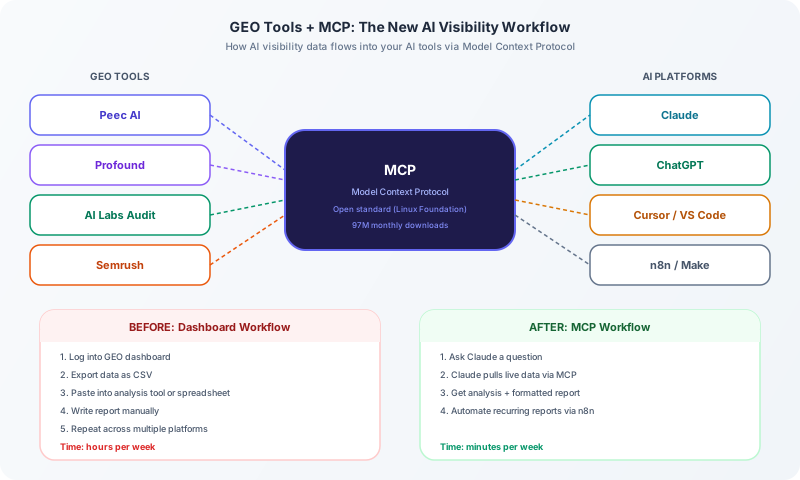
GEO Tools Are Moving Into Your AI Workflow. Here Is What That Changes.
Peec AI, Profound, Semrush, and others are shipping MCP connectors that pipe AI visibility data directly into Claude and ChatGPT. Instead of switching between dashboards, the data comes to you.
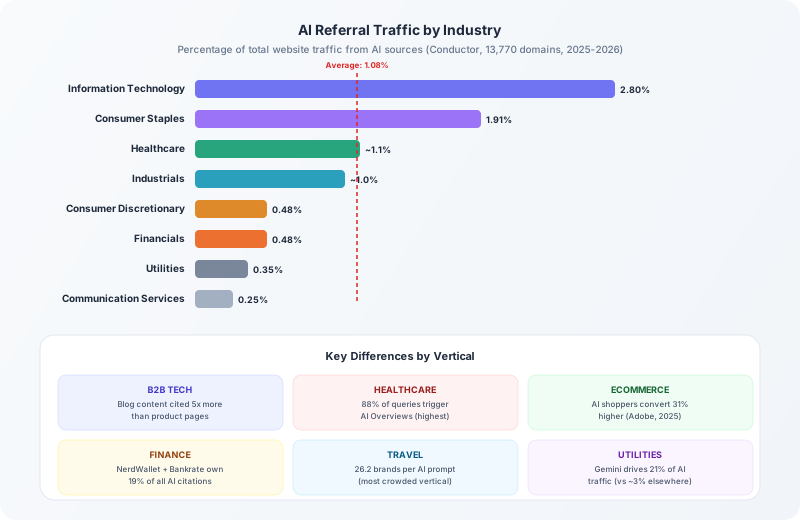
AI Visibility by Industry: What the Data Says About Your Vertical
AI visibility varies dramatically by industry. IT gets 11x more AI traffic than communication services. Healthcare triggers AI Overviews 88% of the time. Here is what the research says about your vertical.
Frequently asked questions
Is optimizing for Gemini the same as optimizing for Google Search?
There is significant overlap. Gemini draws heavily from Google Search results and Google's Knowledge Graph. However, Gemini also uses its own model training data and can synthesize information differently. The best approach is to maintain strong Google Search presence while also building broader web authority.
Does Gemini replace Google AI Overviews?
No. Gemini and AI Overviews are related but distinct products. AI Overviews appear within Google Search results. Gemini is a standalone AI assistant (gemini.google.com). Both draw from Google's infrastructure but serve different user contexts.
How does Gemini handle product recommendations?
Gemini can access Google Shopping data, merchant feeds, and review content. Keeping your Google Merchant Center data accurate and having strong review profiles on Google-indexed platforms helps your products appear in Gemini recommendations.
Does Google have a specific crawler for Gemini?
Google uses Googlebot for search indexing and Google-Extended specifically for controlling whether your content is used for Gemini's AI training. You can block Google-Extended while still allowing Googlebot.
Stay ahead of AI visibility trends
Get weekly insights on AEO, GEO, and AI platform changes delivered to your inbox.
No spam. Unsubscribe anytime.