Google AI Overviews
How to appear in Google's AI-generated summaries at the top of search results
How Google AI Overviews sources and selects content
Google AI Overviews appear at the top of search results for queries where Google determines an AI-synthesized answer would be helpful. The system draws from Google's existing search index, meaning traditional SEO factors (domain authority, relevance, page quality) directly influence whether your content appears in AI Overviews.
Unlike standalone AI platforms, AI Overviews are integrated into the search results page. They include expandable source cards that link to the pages used to generate the summary. Appearing as a cited source in an AI Overview gives your content prime visibility at the top of the SERP.
Google selects sources for AI Overviews based on a combination of existing ranking signals, content relevance, and structural clarity. Pages that already rank well for a query have an advantage, but the system also considers how well content answers the specific question being asked.
How to optimize for Google AI Overviews
Maintain strong traditional SEO fundamentals
AI Overviews draw from Google's existing index. Pages that rank well organically have a significant advantage. Core Web Vitals, backlink profiles, E-E-A-T signals, and technical SEO all influence AI Overview source selection.
Optimize for featured snippet formats
AI Overviews often pull from the same content that would qualify for featured snippets. Structure content with clear definitions, numbered lists, comparison tables, and direct answers to questions.
Use comprehensive structured data
Implement HowTo, FAQ, Product, Review, and Article schema markup. Google uses structured data to understand content relationships and select appropriate sources for AI Overviews.
Create content that answers multi-faceted queries
AI Overviews often appear for complex questions that require synthesis from multiple angles. Create comprehensive content that addresses the "what," "why," "how," and "when" of a topic.
Target informational and commercial queries
AI Overviews appear most frequently for informational queries and research-phase commercial queries. Identify these query types in your keyword strategy and create content specifically for them.
Include authoritative author information
Google's E-E-A-T framework matters even more for AI Overviews. Include author bios with credentials, link to author profiles, and ensure your content demonstrates genuine expertise and first-hand experience.
Articles about Google AI Overviews
View all →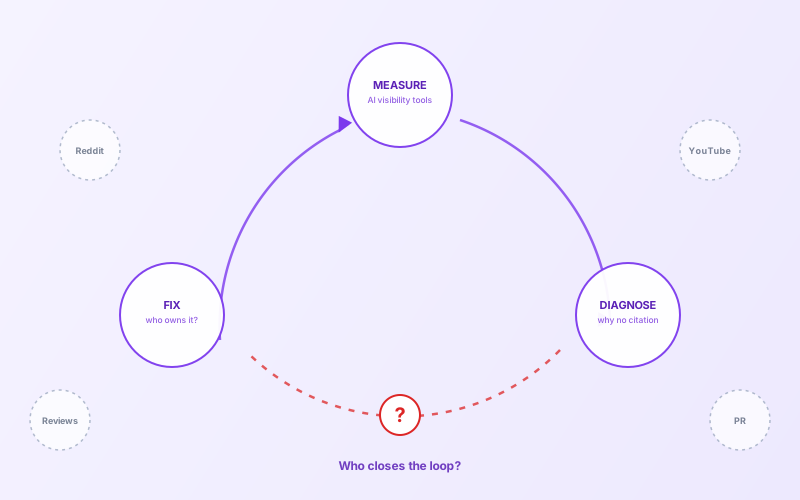
Closing the Loop on AI Search: My Takeaways From Writesonic's AEO Webinar
Notes from Writesonic's webinar on AI search revenue, featuring data from roughly 2 billion AI chat conversations and 18+ years of hands-on search experience from SOZO. Seven takeaways, and the question I can't stop asking: who actually closes the loop between AI visibility data and the fixes that live outside the dashboard?
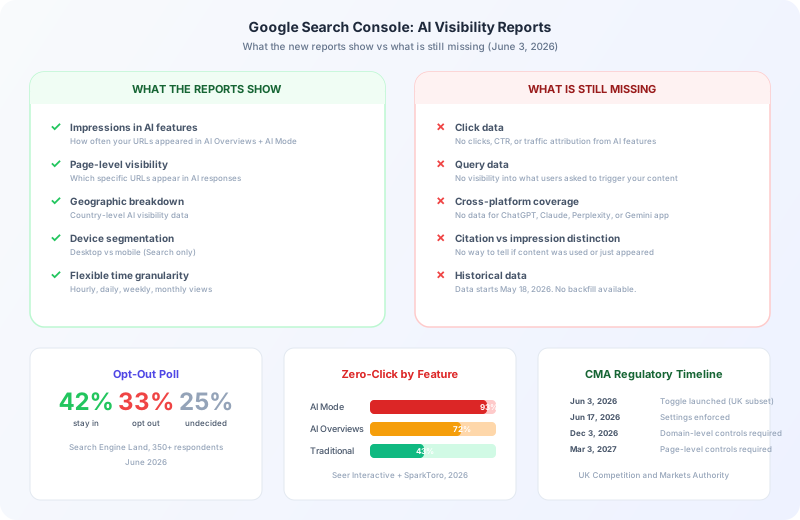
Google Just Built the AI Visibility Tool It Said It Would Not Build. Here Is What the Data Shows (and What It Does Not).
On June 3, 2026, Google launched Generative AI performance reports in Search Console and an opt-out toggle that removes your site from AI Overviews and AI Mode without affecting organic rankings. The reports show impressions but not clicks. Here is what the new data means, who should opt out, and what is still missing.
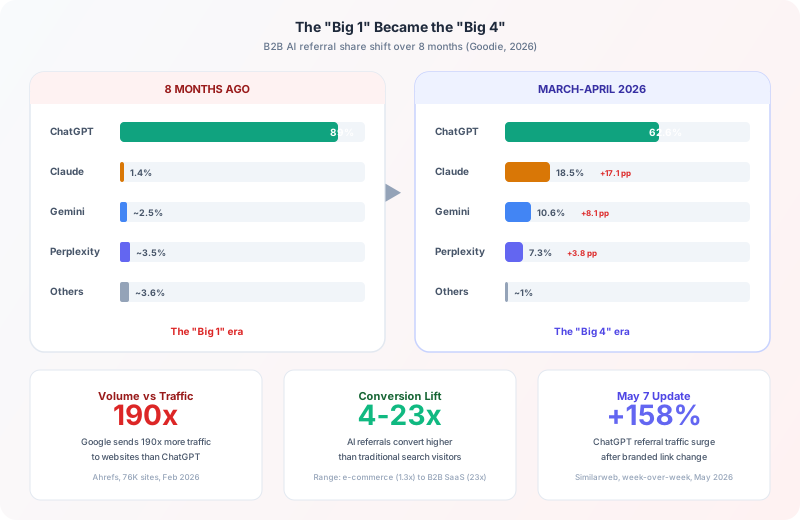
ChatGPT Is No Longer the Only AI Search Engine That Matters. Here Is What the Data Shows.
Eight months ago, ChatGPT held 89% of B2B AI referrals. Today it holds 63%. Claude surged to 18.5%, Gemini quadrupled, and Perplexity more than doubled. The "Big 1" has become the "Big 4," and a single-platform AI visibility strategy no longer covers the market.
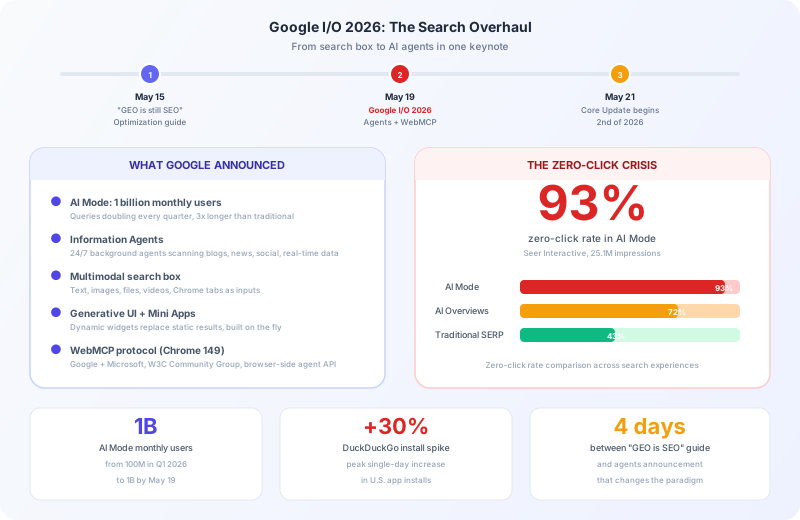
Google I/O 2026 Replaced the Search Box With AI Agents. Here Is What That Means for Visibility.
Four days after telling the industry that GEO is "still SEO," Google announced always-on information agents, a redesigned search box, and generative UI experiences. AI Mode now has 1 billion users and a 93% zero-click rate. Here is what changed and what it means.
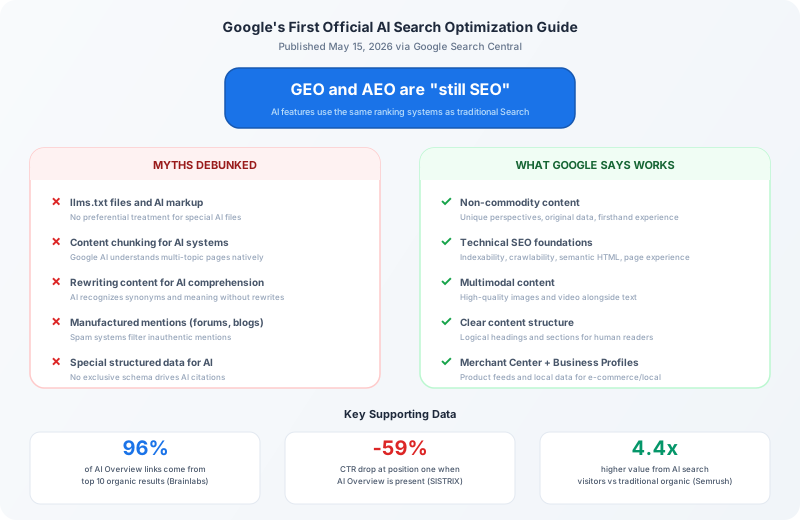
Google Just Published Its First AI Search Optimization Guide. Here Is What It Says.
On May 15, 2026, Google released an official guide to optimizing for AI Overviews and AI Mode. The headline: GEO and AEO are "still SEO." Here is everything the guide recommends, everything it debunks, and what the data says about whether Google is right.
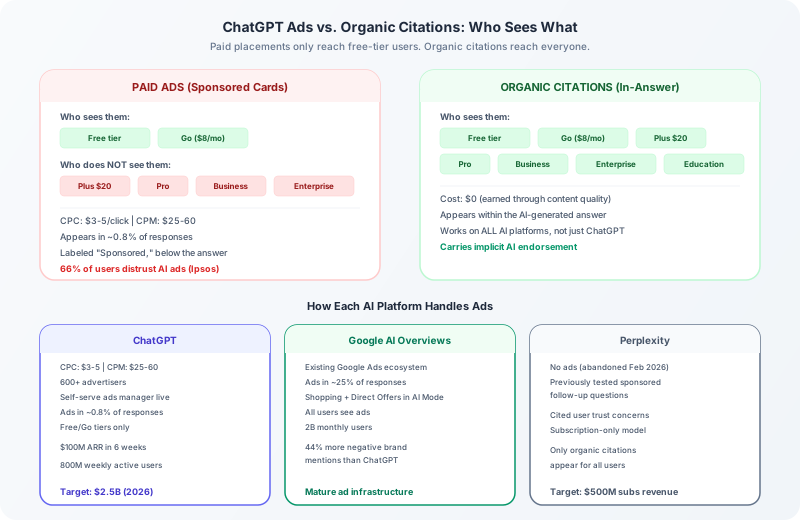
ChatGPT Now Sells Ads at $3 to $5 Per Click. Here Is Everything We Know So Far.
OpenAI launched self-serve CPC ads inside ChatGPT with 600+ advertisers, $3 to $5 per click pricing, and a new ads manager. Here is how the ad platform works, what brands are paying, and what the early data shows.
Frequently asked questions
What is the difference between AI Overviews and featured snippets?
Featured snippets extract a single passage from one source. AI Overviews synthesize information from multiple sources into an AI-generated paragraph, with expandable source cards. AI Overviews can draw from several pages simultaneously, while featured snippets highlight just one.
Do AI Overviews reduce organic traffic to cited websites?
Studies show mixed results. Some queries see traffic reduction because users get their answer from the Overview. But cited sources in AI Overviews often see increased click-through rates compared to positions 3-10 in traditional results. The key is being cited as a source.
Can I opt out of Google AI Overviews?
Google does not currently offer a per-page opt-out for AI Overviews. You can use the "nosnippet" meta tag to prevent your content from appearing in any snippet, including AI Overviews. This also removes regular snippets, so it's a tradeoff.
How do I know if my content appears in AI Overviews?
Google Search Console does not yet provide specific AI Overview reporting. You can manually search for key queries, use GEO tracking tools, or watch for changes in impression and click patterns in Search Console that may indicate AI Overview impact.
Stay ahead of AI visibility trends
Get weekly insights on AEO, GEO, and AI platform changes delivered to your inbox.
No spam. Unsubscribe anytime.