Perplexity
How to earn citations from the AI-powered answer engine built on real-time search
How Perplexity sources and selects content
Perplexity operates fundamentally differently from ChatGPT or Claude. Every response is grounded in real-time web search. When a user asks a question, Perplexity searches the web, retrieves relevant pages, and synthesizes an answer with numbered footnote citations linking to each source.
This makes Perplexity the most citation-heavy AI platform. Every factual claim in its responses is tied to a specific source via numbered references. For brands, getting cited by Perplexity is most directly tied to having well-optimized, easily discoverable web content.
Perplexity uses its own search index alongside partnerships with major search providers. It ranks sources based on topical relevance, content quality, recency, and domain authority. Content that is fresh, specific, and well-structured consistently outperforms generic or outdated pages.
How to optimize for Perplexity
Prioritize factual density and specificity
Perplexity cites sources that provide specific, verifiable facts. Include concrete numbers, dates, methodologies, and data points. Avoid vague claims like "many companies" in favor of "73% of enterprise companies surveyed in 2025."
Publish timely, regularly updated content
Perplexity heavily weights recency. Content with recent dates, updated statistics, and timely analysis gets cited more than evergreen content that hasn't been refreshed. Add "last updated" timestamps and refresh key pages monthly.
Optimize page structure for snippet extraction
Perplexity extracts specific passages from pages. Use clear H2/H3 headings, keep paragraphs focused on single topics, and front-load key information in the first sentence of each section.
Build authoritative backlink profiles
Perplexity uses domain authority as a ranking signal. Traditional link-building and digital PR that improve your domain authority also improve your chances of being cited by Perplexity.
Create comparison and "best of" content
Perplexity users frequently ask comparison questions ("best project management tools," "X vs Y"). Creating thorough, balanced comparison content positions your pages as sources for these high-intent queries.
Ensure fast page load and clean HTML
Perplexity's crawler needs to efficiently parse your pages. Clean, semantic HTML with fast load times improves crawlability. Avoid heavy JavaScript rendering for critical content.
Articles about Perplexity
View all →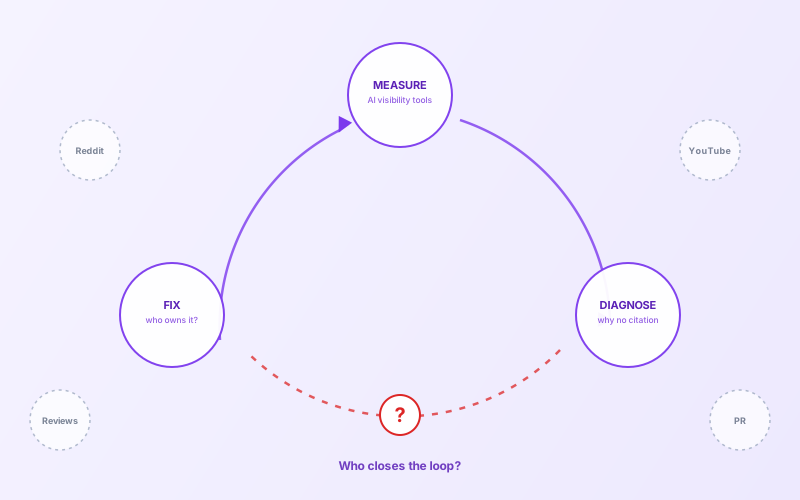
Closing the Loop on AI Search: My Takeaways From Writesonic's AEO Webinar
Notes from Writesonic's webinar on AI search revenue, featuring data from roughly 2 billion AI chat conversations and 18+ years of hands-on search experience from SOZO. Seven takeaways, and the question I can't stop asking: who actually closes the loop between AI visibility data and the fixes that live outside the dashboard?
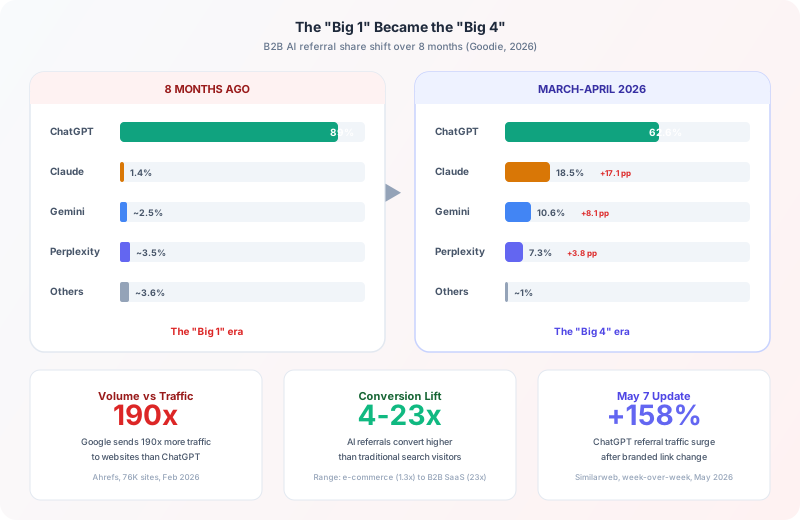
ChatGPT Is No Longer the Only AI Search Engine That Matters. Here Is What the Data Shows.
Eight months ago, ChatGPT held 89% of B2B AI referrals. Today it holds 63%. Claude surged to 18.5%, Gemini quadrupled, and Perplexity more than doubled. The "Big 1" has become the "Big 4," and a single-platform AI visibility strategy no longer covers the market.
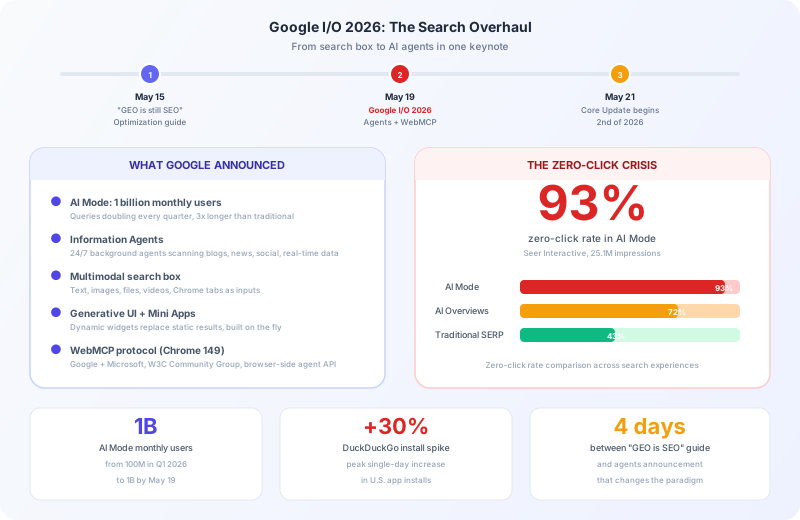
Google I/O 2026 Replaced the Search Box With AI Agents. Here Is What That Means for Visibility.
Four days after telling the industry that GEO is "still SEO," Google announced always-on information agents, a redesigned search box, and generative UI experiences. AI Mode now has 1 billion users and a 93% zero-click rate. Here is what changed and what it means.
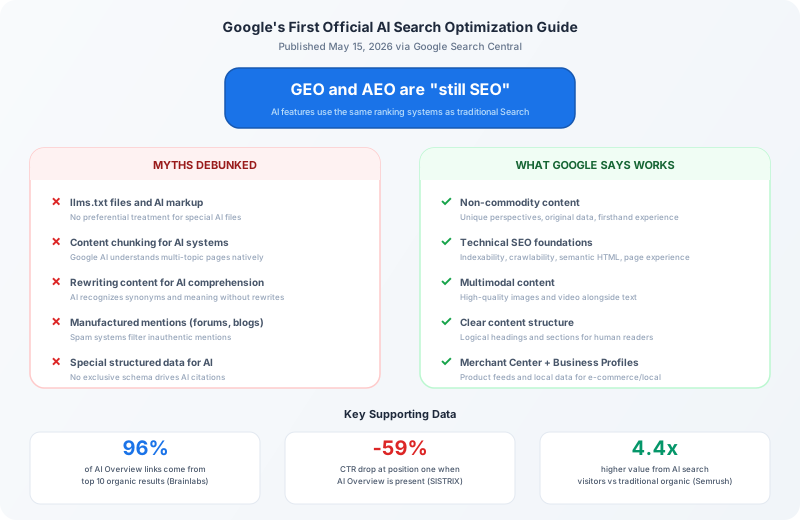
Google Just Published Its First AI Search Optimization Guide. Here Is What It Says.
On May 15, 2026, Google released an official guide to optimizing for AI Overviews and AI Mode. The headline: GEO and AEO are "still SEO." Here is everything the guide recommends, everything it debunks, and what the data says about whether Google is right.
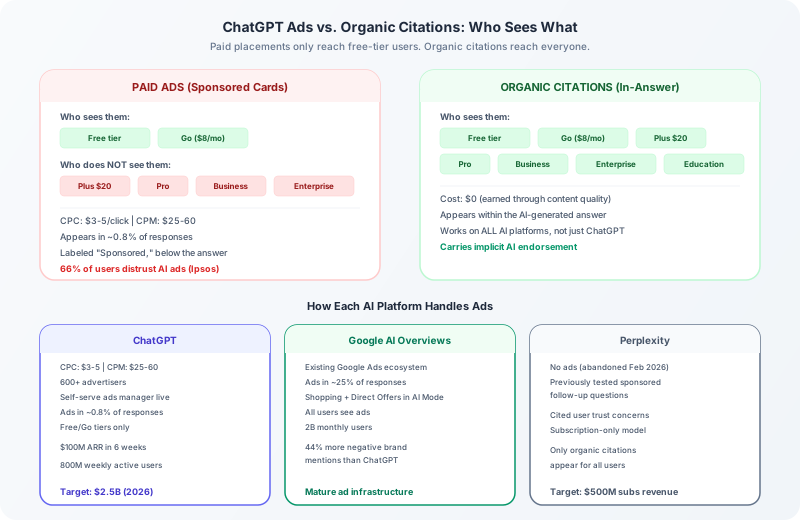
ChatGPT Now Sells Ads at $3 to $5 Per Click. Here Is Everything We Know So Far.
OpenAI launched self-serve CPC ads inside ChatGPT with 600+ advertisers, $3 to $5 per click pricing, and a new ads manager. Here is how the ad platform works, what brands are paying, and what the early data shows.
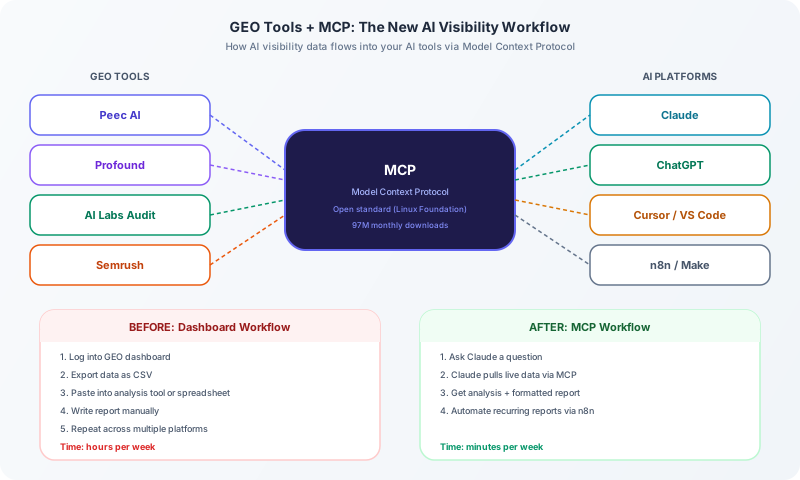
GEO Tools Are Moving Into Your AI Workflow. Here Is What That Changes.
Peec AI, Profound, Semrush, and others are shipping MCP connectors that pipe AI visibility data directly into Claude and ChatGPT. Instead of switching between dashboards, the data comes to you.
Frequently asked questions
How does Perplexity differ from ChatGPT for brand visibility?
Perplexity always searches the web and always cites sources with numbered references. ChatGPT only cites sources when browsing is enabled. This makes Perplexity the more citation-focused platform, and getting cited there is more directly tied to having searchable, well-optimized content.
Does Perplexity use a specific web crawler?
Yes, Perplexity uses the PerplexityBot crawler (user agent: PerplexityBot). You can control its access via robots.txt. Allowing PerplexityBot ensures your content is available for citation in Perplexity responses.
How many sources does Perplexity typically cite per answer?
Perplexity typically cites 5-15 sources per answer, depending on query complexity. Each citation is a numbered footnote linking to the source page. More complex, multi-faceted queries tend to generate more citations.
Can I see how often Perplexity cites my content?
Perplexity does not currently offer a publisher analytics dashboard. You can monitor citations through GEO tracking tools, or by checking referral traffic from perplexity.ai in your web analytics.
Stay ahead of AI visibility trends
Get weekly insights on AEO, GEO, and AI platform changes delivered to your inbox.
No spam. Unsubscribe anytime.