ChatGPT
How to get your brand cited by the world's most popular AI assistant
How ChatGPT sources and selects content
ChatGPT generates responses using a combination of its training data and, when browsing is enabled, real-time web retrieval via Bing. When a user asks a product comparison or recommendation question, ChatGPT synthesizes an answer from multiple sources it considers authoritative and relevant.
For queries where ChatGPT browses the web, it selects sources based on topical relevance, domain authority, content freshness, and structural clarity. Pages with clear headings, direct answers to specific questions, and well-structured data tend to surface more often in cited responses.
ChatGPT's search feature retrieves and cites web pages similarly to a search engine, but presents results as synthesized paragraphs with inline source links rather than a list of blue links. Being cited here means appearing in the answer itself, not just in a sidebar.
How to optimize for ChatGPT
Structure content around questions users actually ask
ChatGPT responds to conversational queries. Format your content with H2/H3 headings that mirror natural questions ("What is the best CRM for small businesses?") and provide direct, authoritative answers in the first paragraph below each heading.
Implement comprehensive FAQ schema markup
FAQ structured data helps ChatGPT's browsing mode identify question-answer pairs on your page. Use FAQPage schema with clear, concise answers that can be extracted verbatim.
Build topical authority through content clusters
ChatGPT favors sources that demonstrate deep expertise on a topic. Create interconnected content hubs covering every angle of your core subjects, with clear internal linking between related pages.
Optimize for entity recognition
Use consistent brand naming, Organization schema markup, and ensure your brand appears on authoritative third-party sources (Wikipedia, industry directories, review platforms) to strengthen entity association.
Provide specific data points and statistics
ChatGPT preferentially cites sources that include concrete numbers, benchmarks, and original research. Include specific data points with clear attribution rather than vague qualitative claims.
Keep content fresh and regularly updated
ChatGPT's browsing mode favors recently updated content. Add visible "last updated" dates, refresh statistics regularly, and publish timely content on trending topics in your space.
Articles about ChatGPT
View all →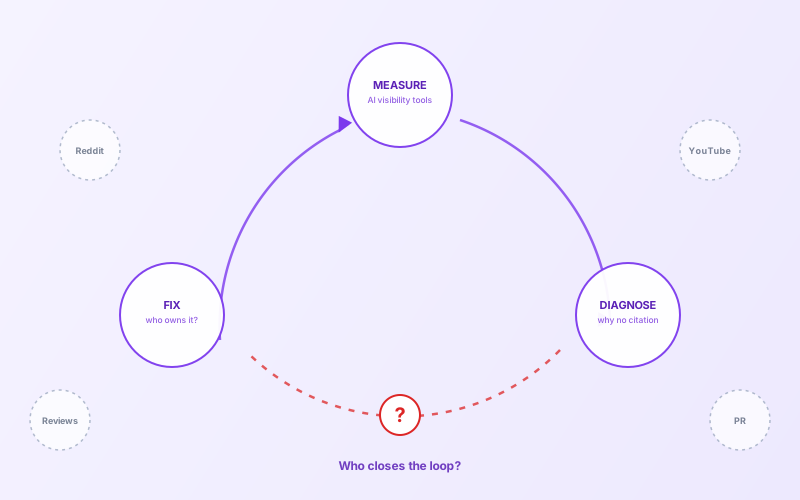
Closing the Loop on AI Search: My Takeaways From Writesonic's AEO Webinar
Notes from Writesonic's webinar on AI search revenue, featuring data from roughly 2 billion AI chat conversations and 18+ years of hands-on search experience from SOZO. Seven takeaways, and the question I can't stop asking: who actually closes the loop between AI visibility data and the fixes that live outside the dashboard?
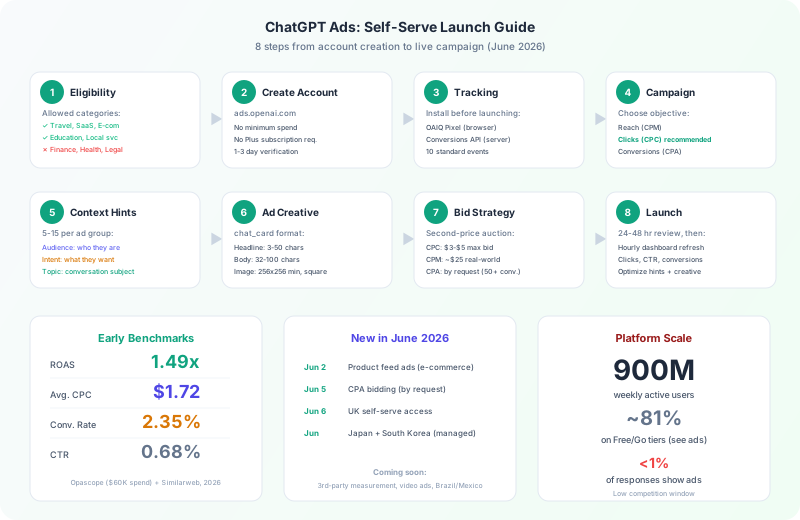
How to Launch ChatGPT Ads: A Step-by-Step Guide to the Self-Serve Platform in 2026
A practical walkthrough for setting up your first ChatGPT ad campaign, from account creation to conversion tracking. Covers eligibility, context hints, bidding, creative specs, and what the early benchmarks show after $60K in tracked spend.
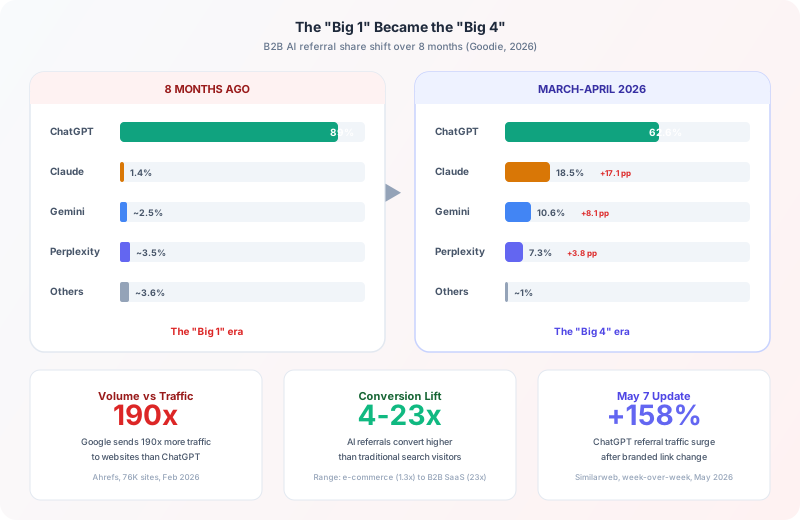
ChatGPT Is No Longer the Only AI Search Engine That Matters. Here Is What the Data Shows.
Eight months ago, ChatGPT held 89% of B2B AI referrals. Today it holds 63%. Claude surged to 18.5%, Gemini quadrupled, and Perplexity more than doubled. The "Big 1" has become the "Big 4," and a single-platform AI visibility strategy no longer covers the market.
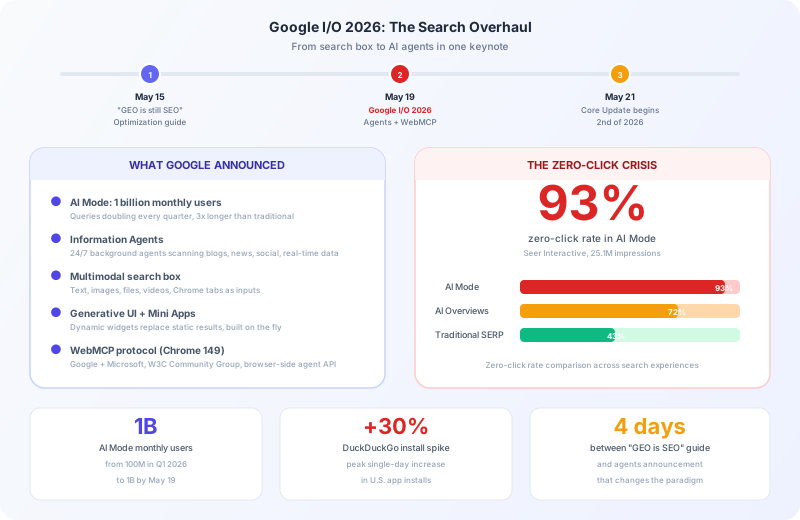
Google I/O 2026 Replaced the Search Box With AI Agents. Here Is What That Means for Visibility.
Four days after telling the industry that GEO is "still SEO," Google announced always-on information agents, a redesigned search box, and generative UI experiences. AI Mode now has 1 billion users and a 93% zero-click rate. Here is what changed and what it means.
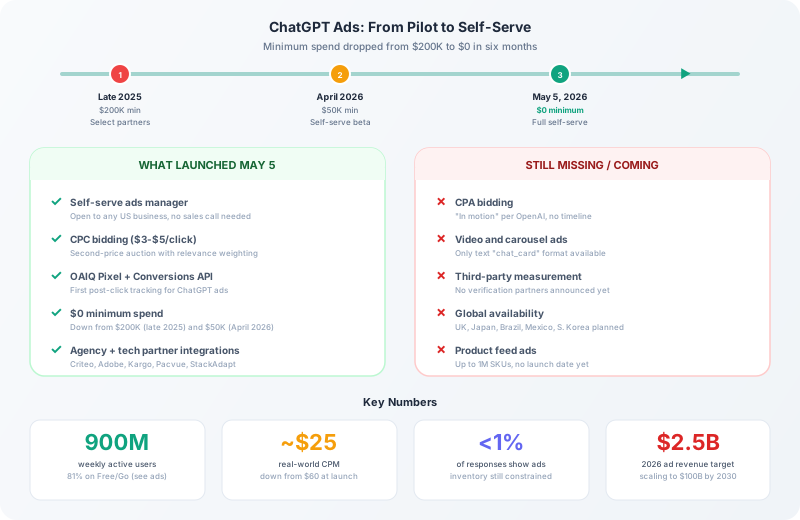
ChatGPT Ads Dropped the $50K Minimum. Here Is What the Self-Serve Platform Looks Like.
On May 5, 2026, OpenAI launched a self-serve ads manager, eliminated the minimum spend, added CPC bidding, and shipped conversion tracking. Two weeks in, here is what the platform includes, what is still missing, and what it means for advertisers.
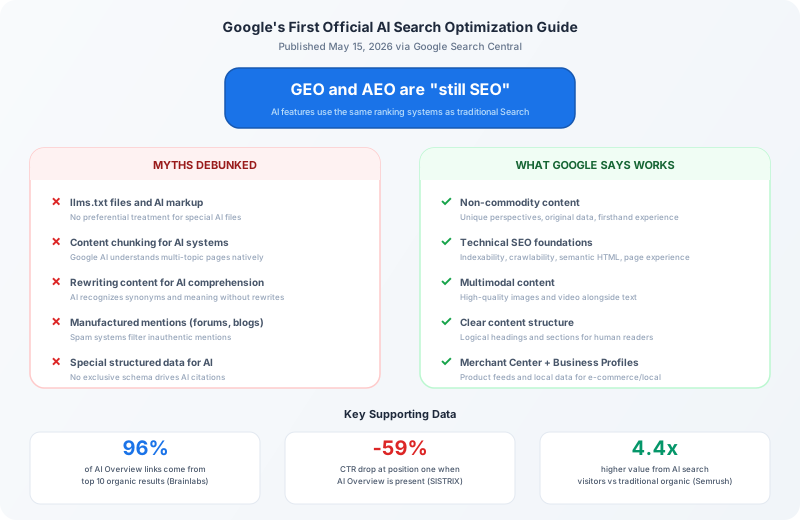
Google Just Published Its First AI Search Optimization Guide. Here Is What It Says.
On May 15, 2026, Google released an official guide to optimizing for AI Overviews and AI Mode. The headline: GEO and AEO are "still SEO." Here is everything the guide recommends, everything it debunks, and what the data says about whether Google is right.
Frequently asked questions
How does ChatGPT decide which websites to cite?
When browsing is enabled, ChatGPT uses Bing to retrieve web pages relevant to the query, then selects sources based on relevance, authority, content structure, and freshness. Pages that directly answer the user's question with clear, well-structured content are more likely to be cited.
What is GPTBot and should I allow it to crawl my site?
GPTBot is OpenAI's web crawler (user agent: GPTBot). Allowing it helps your content appear in ChatGPT's training data and browsing results. You can control access via robots.txt. Most brands benefit from allowing GPTBot access to maximize AI visibility.
How do I track whether ChatGPT is citing my brand?
Use GEO tracking tools that monitor AI platform responses for your brand mentions. You can also look for referral traffic from chatgpt.com in your analytics. Manual spot-checks with relevant queries provide qualitative validation of automated tracking.
Does optimizing for ChatGPT hurt my traditional SEO?
No. The practices that improve ChatGPT visibility (clear structure, direct answers, schema markup, topical authority) also benefit traditional SEO. The two strategies are complementary, not competing.
Stay ahead of AI visibility trends
Get weekly insights on AEO, GEO, and AI platform changes delivered to your inbox.
No spam. Unsubscribe anytime.